
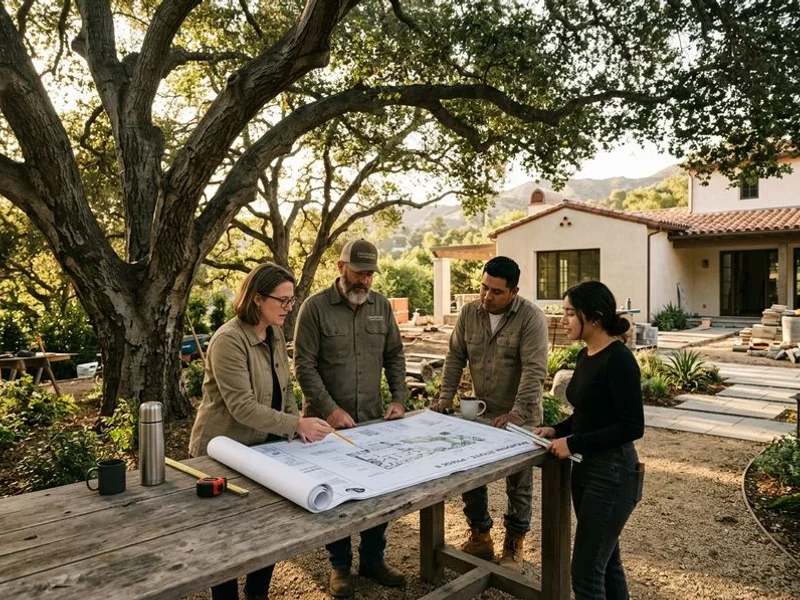
Hardscape Elements That Complement Native Plant Gardens
Native plant gardens do not need much decoration to feel complete. When they are laid out well, the plants themselves carry the visual weight: the movement of bunchgrasses in a breeze, the silvery texture of California sagebrush, the spring bloom of monkeyflower, the sculptural form of manzanita after a dry season. But in practice, even the strongest planting design benefits from a few carefully chosen hardscape elements. Paths, retaining walls, boulders, steps, edging, and patios do more than give a garden structure. They shape how people move through the space, protect slopes, manage runoff, and make a water-wise garden easier to live with.
That matters especially in the San Gabriel Valley, where landscape design often has to answer to sun exposure, hillside conditions, firewise considerations, and water conservation at the same time. A native garden here is not just about plant preference. It is about building something that works with the local climate, supports erosion control on slopes, and keeps irrigation efficient. Hardscaping can help all of that if it is chosen with restraint and installed with a clear purpose.
Hardscape should support the planting, not compete with it
The best native gardens usually feel rooted in the site, not imposed on it. Hardscape should follow that same principle. A broad concrete patio with too many formal edges can overpower a planting palette built around California buckwheat, ceanothus, foothill penstemon, and bunchgrasses. By contrast, a decomposed granite path, a low seat wall, or a set of natural stone steps can make the garden feel settled without stealing attention from the plants.
This is where a thoughtful eye makes all the difference. In hardscaping, the goal is not to add as many features as possible. It is to create the right bones for the garden. If a space already has a strong slope, a hardscape element may need to stabilize it. If it sits in a hot, exposed area, the hardscape may need to reduce reflected heat instead of amplifying it. If the planting design is intended to attract native habitat, the built elements should feel quiet and durable rather than flashy.
Native gardens tend to look best when the materials echo the natural setting. In foothill and hillside landscaping, that usually means avoiding overly polished or formal materials that feel disconnected from the landscape. Texture matters. Color matters. The joints between surfaces matter. Even the way a wall catches light at the end of the day can either reinforce the garden’s calm or break it.
Paths that make a native garden usable year-round
A native garden that cannot be walked through comfortably often ends up being admired from a distance and neglected up close. That is a common problem in drought resistant landscaping. People plant for low water use, then forget the daily practicalities of getting to the hose bib, checking irrigation, pruning back a manzanita that has reached a walkway, or simply enjoying the garden after a rain.
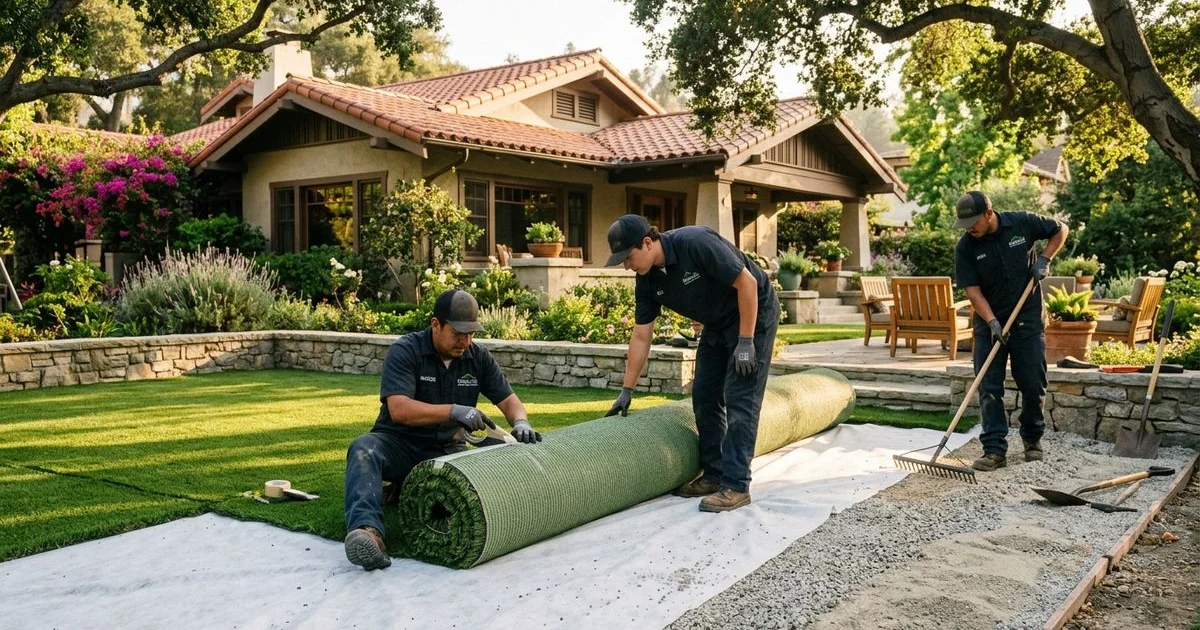
Well-placed paths solve that. They let the garden be experienced in layers. A narrow path might thread between a drift of monkeyflower and a cluster of bunchgrasses. A wider walking route might connect a front entry to a side yard without cutting the planting bed into awkward pieces. In a hillside setting, a path can also reduce wear on unstable soil by directing foot traffic where the ground has been prepared to handle it.
The material matters almost as much as the route. Porous or loose materials can feel more natural in a native garden, especially where the goal is to let rain soak in rather than shed off a hard surface. A path that absorbs water well also fits the larger logic of water-wise design. In California, that logic is not optional anymore. Water agencies consistently push landscape planning that starts with irrigation, soil, sun exposure, and plant selection before turf is removed. That same careful planning should guide hardscape too, because the surface choices influence drainage and irrigation efficiency just as much as the plants do.
There is a practical trade-off here. A very loose path surface may look beautiful and fit the setting, but if it is too soft underfoot or migrates into beds, it becomes a maintenance problem. A more stable path may require more installation work and a cleaner edge. The right answer depends on how the garden is used, the slope, and how much upkeep the owner will realistically accept.
Retaining walls and terraces on slopes
Hillside landscaping often needs more than plant selection. It needs structure. Slopes in the San Gabriel Valley can create drainage problems, exposed soil, and areas where irrigation either runs off too quickly or never soaks in evenly. In those situations, retaining walls and terraces can make a native garden possible where otherwise it would be difficult to keep plants established.
Used well, a retaining wall does two jobs at once. It controls grade and creates a usable planting pocket. That can be the difference between a dry, unstable slope and a series of manageable planting areas where native species can take root. Terracing also helps with erosion control, which is especially important where heavy rain can move soil downhill faster than roots can stabilize it.
The wall itself should suit the plant palette. Low walls can create shelves for smaller shrubs and perennials. Taller walls need more careful engineering and should never feel like a decorative afterthought. They change how water moves through the site, and if they are poorly planned, they can create drainage issues that are difficult to fix later. In native plant gardens, the best walls are often the ones that disappear into the landscape after the planting matures.
A good hillside design respects the slope rather than trying to erase it entirely. A garden with a stepped layout can feel more natural than one that has been flattened in pursuit of uniformity. That approach also fits local concerns in the San Gabriel Valley, where the visual character of hillside properties is part of what makes the area distinct. A landscape that holds the hillside in place while keeping it dry, stable, and attractive is usually worth more than one that imposes a generic suburban flatness.
Steps and landings that make elevation changes feel intentional
When a native garden sits on a slope, steps are often necessary, but they should not feel like an afterthought. A few well-made steps can turn a difficult grade into a pleasant transition. They also reduce the temptation for people to cut across planted areas, which protects the soil and the plants.
The best step designs are modest. They do not need to dominate the space. In a garden full of California sagebrush, ceanothus, and local bunchgrasses, oversized steps can feel heavy. Slimmer, more natural-looking steps can lead the eye without interrupting it. A landing at a turn or a slight widening where someone can pause and look out over the garden can make even a compact yard feel generous.
There is another advantage to working with steps and landings in a native garden. They give the designer a chance to place plant material in pockets that are easier to maintain. Instead of trying to force a single irrigation pattern across an awkward slope, the garden can be arranged in zones. That makes irrigation retrofits easier and allows plants to be grouped by their actual moisture needs rather than by convenience alone.
Boulders, rock accents, and natural structure
Boulders can do a remarkable amount of work in a native garden. They anchor planting beds, reduce the feeling of emptiness on a newly installed slope, and give the eye a place to rest between softer textures. In drought resistant landscaping, they also bring permanence. A well-placed rock can make a planting look established long before the shrubs have filled in.
The key is restraint. Too many rocks can make a garden feel contrived. One or two substantial stones, set as if they belong to the site, usually read better than a scattered collection of decorative pieces. Boulders are especially effective where a hillside needs visual weight near the base or along a path edge. They can also help break up runoff in subtle ways, slowing water just enough for soil to absorb it rather than letting it rush away.
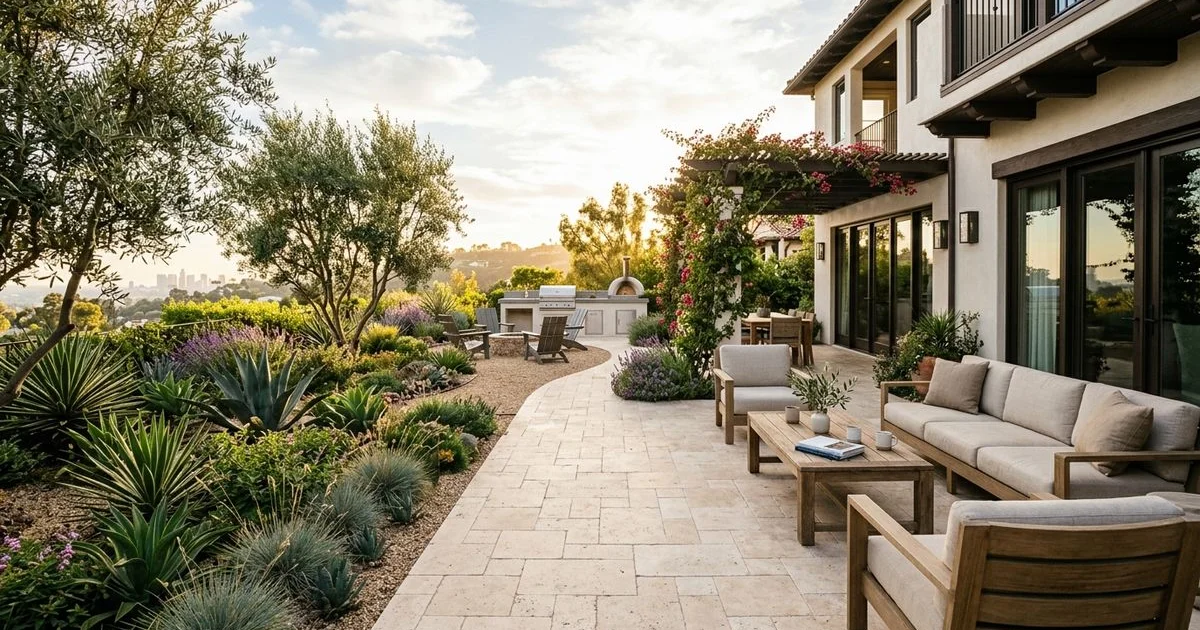
In native plant gardens, rocks work best when they seem to have been there first. Plants should appear to grow around them, not merely next to them. That kind of composition is subtle, but it is what separates a garden that feels grounded from one that feels staged. In the San Gabriel Valley, where native habitat gardening often intersects with firewise planting goals, stone elements can also provide a sense of durability that pairs well with plants selected for dry conditions and local climate fit.
Edging that keeps the design clean without looking rigid
Edging is one of the least glamorous hardscape elements, but it can make or break the maintenance of a native garden. Without it, mulch can spill onto paths, turf removal areas can blur into adjacent beds, and irrigation lines can be harder to keep where they belong. Good edging clarifies the design and protects the work that went into it.
That said, edging should not create a harsh visual line unless the garden calls for that kind of formality. In a native planting scheme, softer edges usually look better. They allow the eye to move between the built structure and the plants without feeling interrupted. Edging should disappear into the background whenever possible, doing its job quietly.
This matters most around mixed-use spaces. A front yard may need a clean line between a native bed and a walkway for curb appeal. A rear hillside garden may need a more durable edge where foot traffic is heavier. The solution is rarely the same in both places. The more exposure a space gets, the more robust the edging often needs to be. But even then, the goal is still to let the plants remain the lead characters.
Patios and gathering spaces in a water-wise garden
A native plant garden does not have to be all planting and no place to sit. In fact, a small patio or sitting area can make the whole landscape more usable and more appreciated. People tend to care for what they use. If there is a comfortable place to spend time outdoors, the garden becomes part of daily life instead of a scene viewed from a window.
For water-wise design, the patio should feel integrated with the rest of the site. That may mean keeping its footprint modest and using materials that do not create excessive heat or glare. In a hot, exposed yard, large expanses of highly reflective hardscape can make the garden less comfortable and increase stress on nearby plants. A smaller patio, shaded strategically by appropriate plantings or placed where the site naturally offers relief, often works better than a grand but overheated slab.
This is where landscape design becomes more than aesthetics. It is about how the garden behaves in real conditions. Sun exposure, irrigation efficiency, and plant selection all influence whether the patio feels like an asset or a compromise. A sitting area that is too close to a thirsty lawn substitute or poorly matched plant group can make maintenance harder. A patio that sits beside drought tolerant shrubs and low-water perennials usually makes more sense in the long run.
Firewise planning and the role of hardscape
In many parts of the San Gabriel Valley, firewise landscaping cannot be treated as a separate conversation. It has to be part of the main design. Hardscape can help here by creating clear zones, reducing the continuity of combustible material, and providing non-vegetated breaks where appropriate.
That does not mean every native garden needs to be stripped down or over-hardened. It means the built elements should be placed with defensible space in mind. Stone paving, walls, and other non-combustible features luxury outdoor living spaces can be useful in areas where separation matters. Plants still belong in the landscape, but their placement should account for how they grow, how much maintenance they require, and how close they sit to structures.
The San Gabriel Mountains region makes this especially relevant. Native gardens in that context often try to balance habitat value with fire-resistant planting principles. The right hardscape can support that balance. A wall can separate a planting bed from a building. A path can create a maintenance corridor. A rock feature can break up a dense planting mass. None of those elements replace good plant selection, but they make the landscape easier to manage responsibly.
Water efficiency starts below the surface
One of the most common mistakes in landscape design is treating hardscape as purely decorative and irrigation as purely technical. In practice, they are intertwined. A path can intercept runoff. A wall can redirect it. A patio can change how heat builds in the garden. A slope can make a sprinkler pattern inefficient if the site has not been properly segmented.
California’s water guidance consistently points people toward careful assessment before removing turf, including irrigation, soil, sun exposure, and plant choice. That same discipline should govern the hardscape plan. If the soil drains quickly in one part of the yard and slowly in another, the built elements need to reflect that. If one side of the property is hot and exposed while another gets late-day shade, the garden should not be forced into one uniform treatment.
This is also where plant selection by microclimate becomes practical rather than theoretical. California buckwheat may thrive in a sunnier, drier pocket. Monkeyflower may appreciate a different placement. Manzanita and ceanothus can fit beautifully, but only if the surrounding grading and hardscape do not create avoidable stress. Hardscape is part of the environment the plants live in. It should be planned with that reality in mind.
HOAs, water rules, and the practical side of change
Homeowners in managed communities sometimes assume they have less freedom than they actually do, especially when making water-efficient landscape changes. California guidance makes clear that homeowners’ associations cannot prohibit certain water-efficient landscaping choices during drought-related restrictions. That matters because native gardens, drought tolerant plantings, and efficient hardscape solutions often go together.
The practical challenge is usually not whether a homeowner is allowed to make the change. It is how to do it in a way that still satisfies design expectations and neighborhood standards. This is where a well-composed hardscape plan helps. A native garden with orderly paths, clearly defined beds, and durable built elements often reads as intentional and finished, not as a temporary experiment. That can reduce friction in places where a front yard transformation might otherwise look too abrupt.
A clean transition from turf to hardscape and native planting also makes maintenance easier for the homeowner. It is simpler to irrigate, easier to weed, and less likely to create muddy spillover after rain. Those are not glamorous benefits, but they are the ones that determine whether the garden holds up after the first year.
Choosing materials that age well with natives
Materials in a native garden should age gracefully. Some surfaces look sharp on installation day but feel out of place after the plants mature. Others look plain at first and improve as the garden settles into them. Experience usually favors the second type.
When selecting materials, it helps to ask a few direct questions. Does the material belong in the local setting, or does it look imported from somewhere else? Will it hold up under sun and irrigation without demanding constant attention? Does it help the garden handle runoff and slope, or does it complicate those issues? Does it let the plants stay in focus?
Native plant gardens rarely need ornament for ornament’s sake. They benefit more from structure, clarity, and a sense that every element has a reason for being there. Hardscape can provide that if it stays humble. A retaining wall can hold a slope and let a hillside planting succeed. A path can invite people into the garden without damaging it. A few stones can give weight and texture. A patio can make the garden livable. Together, those features can frame the plants in a way that feels natural, water-wise, and appropriate to the San Gabriel Valley landscape.
The strongest gardens are often the ones where the built and planted elements are in conversation rather than competition. In a native garden, hardscape should never feel like an interruption. It should feel like the quiet support that allows the whole composition to stand.