
How to Plan a Landscape That Respects Slope and Drainage
A good landscape on level ground is mostly a matter of taste, maintenance, and budget. A good landscape on a slope is something else entirely. Gravity changes every decision. Water moves faster, soil behaves differently, roots have less forgiveness, and a planting mistake that would be minor on flat ground can become a drainage problem, an erosion scar, or a costly repair. That is why slope and drainage have to be part of the plan from the beginning, not something added after the plants are in and the hardscaping is done.
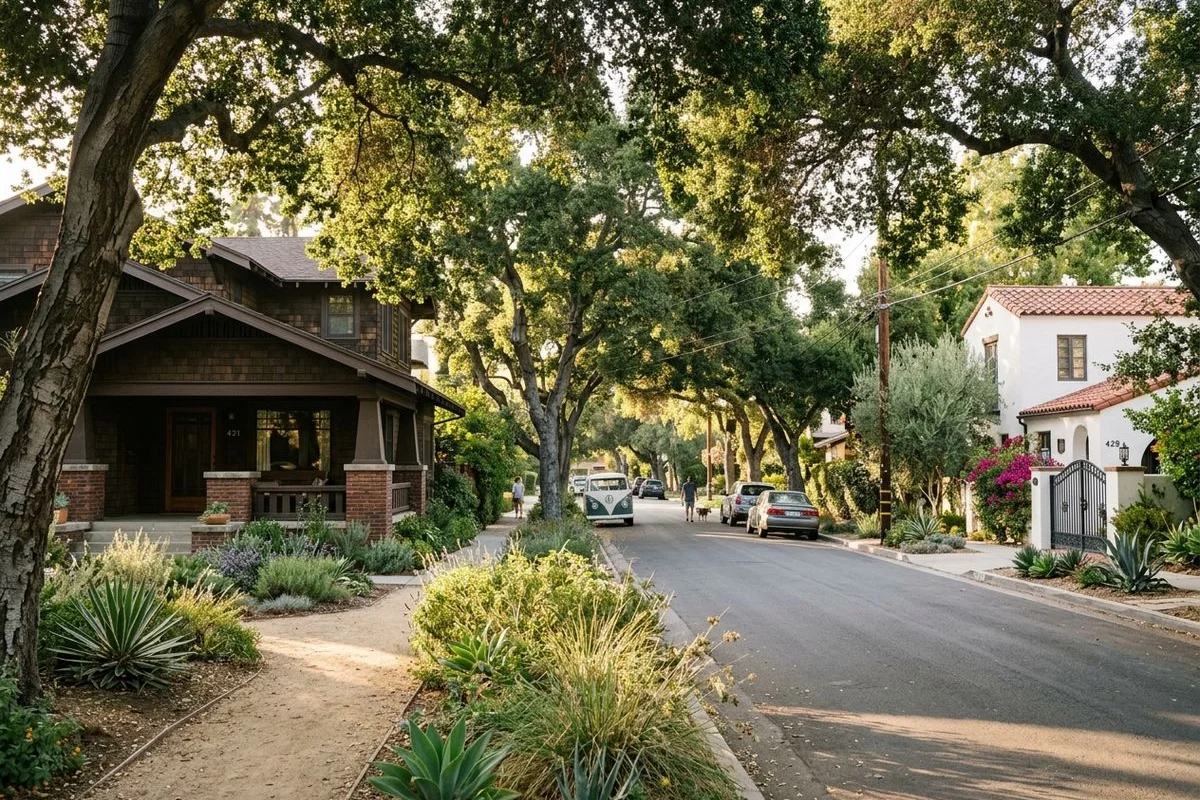
This is especially true in hillside areas where the land itself is part of the visual identity of the neighborhood. In places like the San Gabriel Valley, slopes are not unusual, they are part of the landscape character. A well-designed yard there has to do more than look attractive. It has to move water safely, hold soil in place, reduce irrigation demand, and fit the fire and climate conditions of the site. That means landscape design becomes a balancing act between beauty, stability, and water efficiency.
Start with the land you actually have
Before choosing plants or sketching patios, spend time reading the site. I mean this quite literally. Walk it after a rain if you can. Notice where water collects, where it rushes, where the soil is exposed, and which areas dry out first. The best landscape plans come from observing the property before any major work begins.
California’s water conservation guidance points people toward a simple but useful habit: assess irrigation, soil, sun exposure, and plant selection before removing turf. That advice matters even more on a slope, because the wrong sequence can create expensive rework. If you rip out lawn before understanding drainage, you may discover that a formerly simple area now sheds water too fast or leaves bare soil exposed to erosion.
Sun exposure also changes far more on a slope than many homeowners expect. The top of a hillside may bake in full sun, while a lower terrace sits in partial shade for part of the day. A north-facing slope can be cooler and slower to dry, while a south-facing slope can be much harsher and windier. The same plant can struggle in one zone and thrive twenty feet away. Good landscape design respects those microclimates instead of forcing a single plant palette across the whole property.
Soil deserves equal attention. Slopes are unforgiving when soils are loose, compacted, or shallow. The goal is not only to make the site look better, but to give water a controlled path through it. If the ground is already moving water unpredictably, planting alone will not fix the problem. The plan has to account for grading, hardscaping, and irrigation together.
Drainage comes before decoration
Drainage is not a cosmetic issue. It is the skeleton underneath the landscape. If water is allowed to run where it wants, it will carve channels, undermine paths, and take topsoil with it. If it is forced into the wrong place, it can pool near foundations, saturate planting beds, or overwhelm low spots.
On sloping sites, the most common mistake is assuming the lawn or mulch will slow runoff enough on its own. Sometimes it does not. Water can move quickly over bare soil, compacted areas, and even across some planted zones if the surface does not absorb it well. The answer is to shape the site so water is intercepted, slowed, and directed intentionally.
That might mean a series of planting terraces, a curved hardscape edge that catches flow, or a drainage path that leads water to a safer outlet. In some landscapes, small grade changes do most of the work. In others, hardscaping is essential because it gives structure where the slope is too strong for simple planting alone. A retaining wall, a stair run, or a paved landing can be more than a design feature. It can be the practical solution that keeps the rest of the yard functional.
The key is to treat every surface as part of a water system. Pavers, decomposed granite, planted slopes, and lawn all behave differently in rain and irrigation. A polished design takes that into account and avoids creating one problem while solving another.
Hardscaping should support the slope, not fight it
Hardscaping has a special role on hillsides because it creates usable space without pretending the land is flat. On a steep property, a patio may need to sit on a stable pad rather than on the natural grade. Steps may need to commercial hardscaping Pasadena be deeper and gentler than they would on level ground. Walkways should feel secure when wet and should not create accidental channels where water accelerates downhill.
The best hardscaping is discreet and structural. It gives the landscape shape, but it also tells water where to go. In some cases, a low wall or a series of steps does more for the long-term health of the yard than an extra row of plants ever could. That is especially true where slope and drainage are closely linked. A nicely planted bank that keeps washing out is not a successful planting design.
Material choice matters too. Surfaces that are too slick or too sealed can shed too much water too quickly. Permeable or more absorbent finishes can help in the right setting, though they still need proper grading and drainage behind them. In hillside landscaping, hardscaping works best when it is modest, durable, and clearly tied to the terrain.
A practical example: I have seen a narrow side yard on a slope transformed by a sequence of short landings and planting pockets. The original problem was fast runoff and a muddy path. Once the circulation route was broken into usable pieces, water stopped racing through the space, and the planting beds had a chance to establish. The yard became safer and easier to maintain without trying to flatten the entire site.
Use plants as part of the water strategy
Plants are not just decoration, they are part of the drainage and erosion control system. Their roots hold soil, their canopies slow rainfall, and their placement can reduce the speed of runoff. On a slope, that matters as much as flower color or seasonal interest.
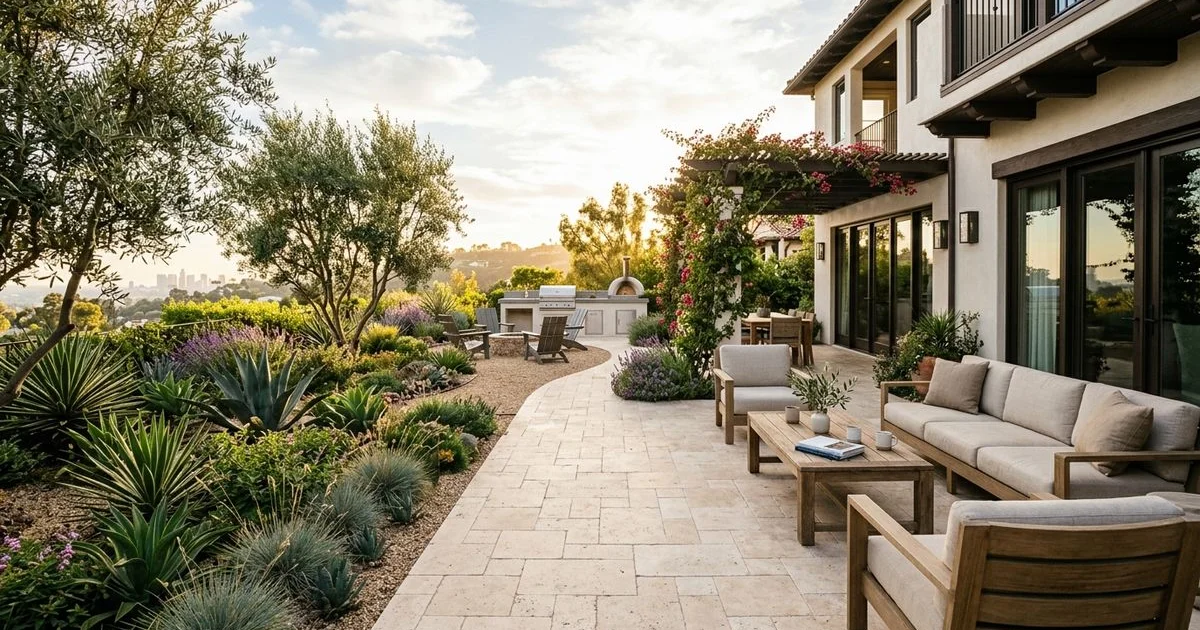
For California landscapes, especially in places where drought-tolerant landscaping is a priority, plant selection should be tied to local water needs and site conditions. The state’s plant and landscape guidance encourages using resources like WUCOLS to match plants to regional water requirements. That is useful because it keeps plant choices grounded in how much water a plant actually needs, rather than in how appealing it looks in a nursery pot.
On hillside sites, drought-resistant landscaping often performs better than thirsty, shallow-rooted plantings. Native and climate-appropriate species generally fit the terrain more naturally, especially in areas where water conservation and wildfire awareness both matter. In the San Gabriel Valley, that means plants like California buckwheat, California sagebrush, manzanita, ceanothus, monkeyflower, foothill penstemon, bunchgrasses, and locally named natives such as San Gabriel oak can all play a role when matched properly to the microclimate.
These plants are useful not because they are trendy, but because they are adapted to local conditions. Many handle sun, slope, and periodic dryness well once established. They also work well when grouped by water need, which makes irrigation simpler and less wasteful. A hillside planted with a mix of species that all demand similar water tends to be easier to manage than a patchwork of plants with competing needs.
There is a trade-off, of course. Native and drought-tolerant plants may take time to establish, and they do not always look lush in the way a water-hungry ornamental bed might in its first season. But the long-term payoff is real. You reduce irrigation demand, improve resilience, and create a landscape that feels more at home in the terrain.
Irrigation should be designed for the terrain, not copied from a flat yard
Irrigation retrofits are often the point where hillside landscapes either become efficient or stay frustratingly wasteful. A flat-spraying system that worked in a lawn-heavy yard can be a poor fit on a slope. Water may run off before it soaks in, or overspray may land on hardscape and carry sediment downhill.
The better approach is zone-based. Different parts of the site should get different irrigation treatment depending on slope, sun, soil, and plant type. A sunny upper bank with drought-tolerant shrubs should not be watered the same way as a shaded lower bed with deeper soil. Efficient irrigation is not only about equipment, it is about matching delivery to plant need and surface behavior.
This is where plant selection and irrigation design belong in the same conversation. California water guidance emphasizes evaluating irrigation, soil, sun exposure, and plant selection together before making major turf changes. That makes sense. Removing turf without updating the irrigation plan can leave you with oversupplied beds or dry pockets that never quite recover.
A smart retrofit may include drip irrigation in planted slopes, careful controller scheduling, and pressure checks to make sure the system is working as intended. The goal is not to water less by accident. The goal is to water only where it is useful, in amounts the slope can actually absorb.
Turf removal needs a plan, not just a decision
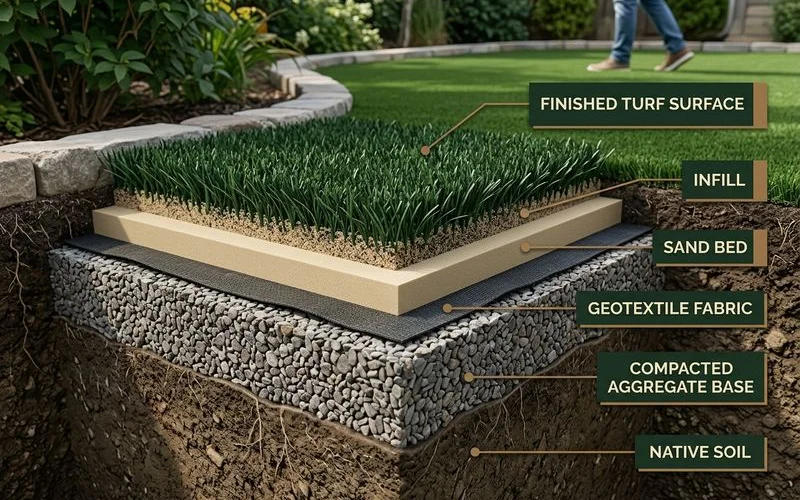
Many homeowners start a renovation by saying they want to remove lawn. That can be a wise move, especially in dry climates, but turf removal should not happen in isolation. The California guidance is clear that before removing turf, it is worth understanding irrigation, soil, sun exposure, and plant selection. On a slope, that advice becomes even more important because turf may be hiding erosion issues or poor drainage patterns.
If turf is removed from a hillside and nothing replaces its stabilizing function, the site can become vulnerable to runoff and exposed soil. Bare ground on a slope is a short-lived condition at best. Rain, wind, and gravity will make sure of that. Replacement should happen quickly, and the new design should include ground cover, shrubs, or other vegetation that helps anchor the soil.
This is one place where drought-resistant landscaping offers a practical advantage. A well-planned native or climate-appropriate palette can reduce water demand without leaving the hillside looking stripped down. The landscape can still feel finished, but it does so with plants that are better suited to the terrain and the long-term maintenance reality.
Firewise choices belong in the plan too
In hillside areas, fire considerations are not separate from drainage and slope. They are part of the same design conversation. The San Gabriel Mountains and nearby foothill landscapes are closely tied to native habitat, but they are also environments where firewise planting, defensible-space planning, and ember-resistant thinking matter.
Fire-resistant planting does not mean making a landscape barren. It means choosing and placing plants with care, reducing continuous fuel, and keeping the area around structures sensible and maintainable. Slope makes this more important because flames and wind can behave differently on rising ground. Plantings should be arranged so maintenance remains realistic and so the landscape does not encourage fire to travel unchecked.
This is another reason native and climate-appropriate species are often a strong fit. Many of the plants suited to drought are also better matched to local firewise approaches than high-water, high-mass plantings that become difficult to maintain. The point is not to eliminate all vegetation. The point is to create a landscape that can be cared for without constant intervention and that does not increase risk through poor layout.
HOA rules and water-wise landscaping
For homeowners in planned communities, the administrative side can be just as important as the planting plan. California water-restriction guidance says homeowners’ associations cannot prohibit certain water-efficient landscaping choices during drought-related restrictions. That matters because a water-wise renovation should not be blocked simply because it looks different from the old turf-based model.
Still, even when a landscape is permitted, it should be designed with the community setting in mind. In neighborhoods where the hillside visual character is part of the appeal, drought-tolerant landscaping can preserve that look while reducing water use. Well-chosen native plantings often blend better with the surrounding terrain than imported, high-maintenance landscapes that fight the site.
For anyone working within HOA rules, the practical approach is to document the plan carefully. Show irrigation changes, plant selection, and slope treatment clearly. When the design is grounded in water efficiency and site response, it is much easier to defend and maintain.
A landscape that holds together over time
The strongest hillside landscapes have a quiet logic to them. Water moves where it should. Soil stays in place. Paths feel safe. Plants look like they belong there. Maintenance becomes manageable because the design anticipated the realities of slope instead of denying them.
That kind of result usually comes from patience and sequencing. First, understand runoff and drainage. Then decide where hardscaping is necessary and where plants can do the work. After that, choose species for the actual microclimate, not a generic catalog picture. Finally, set irrigation to support the terrain rather than overcompensate for it.
In practice, that may mean a mix of terraced planting areas, gravel or permeable circulation paths, native shrubs, bunchgrasses, and carefully positioned accent plants. It may mean leaving some parts of the slope more open than a homeowner originally wanted, simply because the site needs air, access, and a way for water to pass without damage. It may mean accepting that the best landscape is not the one with the most plant material, but the one that stays healthy through summer heat, winter rain, and the occasional hard storm.
A slope can be one of the most rewarding kinds of property to landscape because it forces good decisions. It asks for discipline. It rewards water-wise thinking, careful grading, and strong plant selection. It also creates a chance to build something that feels rooted in the land rather than imposed on it. When slope and drainage are respected from the start, the finished landscape tends to look calmer, last longer, and ask less of everyone who lives with it.