
Drought-Resistant Landscaping Tips for the San Gabriel Valley
The San Gabriel Valley asks a lot of a landscape. Summers run hot, slopes are common, water use is under more scrutiny than it used to be, and many properties sit in a visual corridor shaped by foothills, canyons, and the San Gabriel Mountains. A successful yard here is not just about surviving a dry season. It has to handle irrigation limits, runoff, soil that may behave differently from one part of the property to another, and the practical realities of firewise planting and hillside stability.
That is why drought-resistant landscaping in this part of Southern California works best when it is treated as a design problem, not a plant shopping exercise. The most durable landscapes are usually the ones that start with a sober look at irrigation, soil, sun exposure, and how the property actually drains. Turf comes out, but it should come out for a reason. The replacement plan has to match the microclimate, the slope, and the way people use the space. Otherwise, the yard may look fine in the first season and then become expensive, patchy, or difficult to maintain.
Start with the site, not with the plant palette
The California water agency’s landscape guidance gets one thing exactly right, you should assess irrigation, soil, sun exposure, and plant selection before removing turf. That sequence matters because the same plant can thrive in one part of a yard and fail in another. A north-facing side yard with reflected heat from a wall is a different environment from an open front slope that takes full afternoon sun. Even two spots only twenty feet apart can have very different water needs if one sheds water quickly and the other collects it.
I have seen homeowners choose drought-tolerant plants based on a neighborhood photo or a nursery label, then wonder why one bed looks stressed while another stays lush. Usually, the issue is not the plant list. It is the mismatch between plant and microclimate, or the irrigation system is still delivering water like the old lawn was there. If the sprinkler layout was designed for turf, it will often overwater some spots and underwater others once the turf is gone. A retrofit usually makes more sense than trying to nurse a legacy system along.
The other reason to begin with site conditions is that the San Gabriel Valley includes both flatter residential lots and steep, exposed hillside landscaping. A flat yard may allow broader planting masses and more room for hardscaping. A slope, by contrast, often needs erosion control first, then plants that can knit the soil together without demanding heavy irrigation. The right answer changes with the grade.
Turf removal only works when the replacement is designed with intent
Turf removal is one of the most effective ways to reduce water demand, but only if the replacement landscape is designed around the new conditions. Once lawn is gone, the temptation is to fill the space with decorative rock and a few isolated shrubs. That can be a mistake in a climate like this. Bare mineral surfaces collect heat, increase glare, and can make a yard less pleasant to use. They also do little to slow stormwater or stabilize soil on a slope.
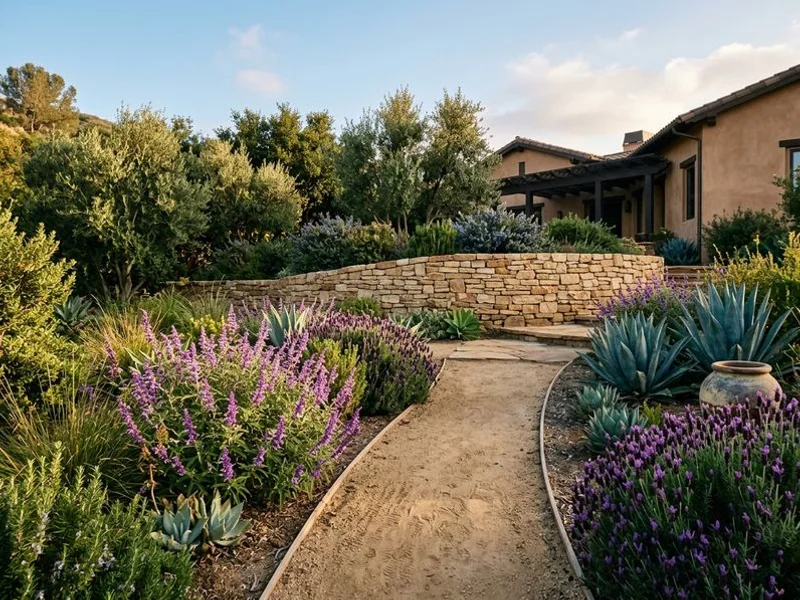
A better approach usually combines drought resistant landscaping with layered planting, efficient irrigation, and hardscaping where circulation or slope control calls for it. In practical terms, that means a space can shift from “all turf” to a mix of planting beds, decomposed granite paths, retaining edges, drainage solutions, and more targeted plant clusters. The goal is not to eliminate every soft surface. It is to make every square foot earn its place.
California’s landscape regulations for new and renovated projects also push in this direction. The state’s Model Water Efficient Landscape Ordinance encourages water-efficient planning, climate-appropriate and native plants, and efficient irrigation. That framework is useful because it forces the kind of discipline that tends to improve long-term results anyway. Landscapes that ignore water budgets often look good only until the first difficult summer.
What usually belongs in a replacement plan
A good replacement plan tends to include these pieces, each doing a specific job rather than just filling space:
- Plants matched to sun, slope, and water needs
- Irrigation that fits the new planting pattern
- Mulch or groundcover that protects soil
- Hardscaping where foot traffic or grade change requires it
That mix creates a landscape that can handle the valley’s climate without leaning on constant watering.
Plant selection should be local, not generic
“Drought tolerant” is a broad label, and it can hide a lot of bad fits. For the San Gabriel Valley, the strongest choices are usually California native plants or other climate-appropriate species with water needs that fit local conditions. The California water agency points homeowners toward WUCOLS as a way to understand region-appropriate plant water needs. That matters because a plant may be drought tolerant in a general sense but still need more water than a property can comfortably provide if it is placed in a hot, reflected, west-facing bed.
Several garden landscapers Pasadena native and locally appropriate plants show up again and again because they make sense in this region. California buckwheat, California sagebrush, manzanita, ceanothus, monkeyflower, foothill penstemon, bunchgrasses, and San Gabriel oak are all strong examples of plants that can fit a water-wise landscape while still feeling rooted in place. They are not interchangeable, though. Ceanothus can be a beautiful structural shrub, but it needs enough room to mature properly. California sagebrush brings a lighter, more informal texture, while bunchgrasses add movement and help a planting bed read as cohesive rather than sparse.
What matters most is matching the plant to the job. If the space needs screening, a low mound of monkeyflower will not do the same work as a larger shrub. If the slope needs stabilization, scattered ornamentals will not hold soil the way a dense planting matrix can. If the front yard needs a sense of place, the palette should lean toward plants that belong in the region instead of imported species that fight the climate.
There is also a visual benefit to using natives and climate-appropriate plants. They help a yard feel like part of the San Gabriel Valley rather than a generic suburban installation. That is especially important where the local hillside character is part of the property’s identity. A landscape can be water-wise and still feel layered, generous, and well composed.
Hillside landscaping needs more than drought tolerance
On level ground, drought resistance can be mostly about reducing irrigation and choosing the right plant mix. On a slope, erosion control and drainage enter the picture immediately. The California Native Plant Society has emphasized that hot, sunny slopes need drought tolerance, erosion control, and firewise planting. That combination describes a huge share of hillside landscaping problems in this region.
A hillside can fail in ways that flat ground never will. Water can run off before roots absorb much of it. Soil can creep. Mulch can wash downslope. A poorly designed irrigation system can saturate one area while leaving the upper slope dry and vulnerable. In a heavy rain, all of those weaknesses can show up at once. Good design respects gravity.
This is where hardscaping earns its keep. Terracing, retaining edges, drainage swales, and carefully placed paths can all help control movement on a slope. Hardscaping should not be treated as a decorative afterthought. In hillside landscaping, it is often the structural frame that lets the planting succeed. Without that frame, even healthy plants may struggle because the soil profile keeps changing after every irrigation cycle or storm.
Planting on a slope also rewards density and repetition. A few isolated shrubs rarely provide enough root coverage. Massed plantings of compatible species do a better job of protecting the soil and creating a visual rhythm. That does not mean making the slope look crowded. It means building a living mat of roots, stems, and foliage that can work with the grade instead of against it.
Firewise decisions belong in the same conversation
Firewise planning is not a separate topic for another day. In the San Gabriel Valley, it belongs in the same conversation as water efficiency and slope stability. The San Gabriel Mountains area is home to many rare, threatened, and endangered species, and the region’s native plant communities are part of what makes the foothills so distinctive. At the same time, local guidance around ember-resistant zone rules and native garden planning reflects a clear reality, plants and materials have to support defensible-space thinking as well as aesthetics.
That does not mean a drought-resistant landscape needs to look barren or over-mineralized. It does mean the planting plan should be thoughtful about spacing, maintenance, and material choice. Shrubs should not be packed in a way that creates unnecessary fuel continuity. Dead material should not be allowed to accumulate. Irrigation should be precise, not wasteful. And the landscape should be managed so it stays healthy enough to resist stress, because stressed plants are more vulnerable to both pests and fire concerns.
In practice, the best firewise landscapes in this region feel orderly without looking sterile. They use plant masses, open space, and materials with intent. They also avoid the common mistake of relying on one dramatic plant form and neglecting everything else. A well-kept landscape with appropriate spacing and low fuel buildup is much easier to maintain than a yard that has been allowed to become tangled.
Water-efficient irrigation is still the backbone
Even the best plant palette will underperform if irrigation is sloppy. Many landscapes in the San Gabriel Valley still rely on systems installed for turf, and those systems often need a serious retrofit once the landscape changes. A water-wise design should use irrigation that matches the actual planting zones, not the old lawn footprint. If part of the yard is shade and another part is full sun, those areas may need different schedules and sometimes different delivery methods.
Drip irrigation often makes sense in planted beds because it puts water where roots can use it more efficiently. But drip is not magic. Emitters can clog, lines can be misplaced, and mulch can shift. The system needs to be checked. Sprinkler heads that used to cover lawn may now be throwing water onto hardscape, fences, or the street. That is wasted water, but it can also create maintenance problems and encourage weed growth where water is not needed.
Timing matters too. Deep, less frequent irrigation often fits established drought-tolerant planting better than shallow, frequent watering. Still, the correct schedule depends on the site, the plant mix, and seasonal conditions. A landscape built around native plants may need more water during establishment, then far less once roots are developed. That transition period deserves attention. Too many water-wise landscapes fail because owners expect instant low maintenance in the first year. Establishment is part of the process.
If there is one practical habit that pays off quickly, it is regular irrigation review. A system that looked fine at installation can drift out of calibration as plants mature and weather patterns change. Two or three checks a year can prevent a lot of waste.
Drainage and stormwater runoff should be designed, not guessed at
San Gabriel Valley properties do not all handle water the same way, and drainage is often the hidden issue behind a landscape that never quite works. Runoff can build up where soil has been compacted, where slopes funnel water, or where hardscaping creates a new low point. In drought resistant landscaping, the challenge is to conserve water without creating drainage failures. Those two goals can support each other if the design is careful.
Permeable surfaces, grading that sends water to planted areas where appropriate, and planting layouts that slow runoff can all help. On a hillside, that can mean the difference between soil that stays in place and soil that migrates downhill after every storm. On flatter sites, it may mean preventing pooling near foundations or planting beds.
This is also where a landscape designer earns real value. The best design decisions are often invisible once the work is complete. You may never notice the small grade adjustment that sends water into a basin or the retaining detail that keeps a path dry. But you will notice when those choices are missing. A yard can be drought tolerant on paper and still struggle if stormwater has nowhere sensible to go.
HOA rules do not override water-wise choices
For homeowners in HOA communities, landscape choices sometimes feel more constrained than they actually are. California water restriction guidance makes clear that homeowners’ associations cannot prohibit certain water-efficient landscaping choices during drought-related restrictions. That does not eliminate every community rule, of course, but it does matter when a homeowner is trying to replace turf, install climate-appropriate plants, or move toward a more efficient landscape.
This is useful because HOA landscapes often need the biggest water savings. They also tend to be highly visible, which means they influence neighborhood expectations. A well-designed drought resistant landscape can look finished, intentional, and polished enough to persuade skeptical neighbors that water-wise design is not a downgrade. That is especially true when the hardscaping is clean, the plant layout is coherent, and the irrigation has been tuned properly.
For many households, the best compromise is not a dramatic transformation all at once. It is a staged project that starts with the most wasteful area, often turf or an overwatered slope, then expands as the property budget allows. That approach can work very well if the first phase is designed as part of a broader plan.
A landscape that fits the valley
The strongest San Gabriel Valley landscapes tend to share a few traits. They conserve water without looking stripped down. They respect the hill and the climate. They use hardscaping where structure is needed, native and climate-appropriate plants where living coverage makes sense, and irrigation that matches the actual site rather than the old idea of a lawn. They are also realistic about maintenance. A beautiful drought-tolerant yard still needs seasonal attention, especially during establishment and after weather swings.
That kind of landscape does more than save water. It fits the valley’s terrain and visual character. It also tends to age better. A planting plan built around California buckwheat, ceanothus, manzanita, monkeyflower, foothill penstemon, bunchgrasses, and other appropriate species is more likely to stay attractive through the dry months than a landscape that depends on constant intervention. On a hillside, it can also help hold soil and work with firewise goals. On a flat lot, it can create depth and texture without excessive irrigation.
The most reliable results come from restraint and observation. Watch where the sun lands. Study where water moves. Give slopes structural support. Choose plants for the exact exposure they will live in, not the best-case version of it. Use hardscaping as a tool, not a decoration. In a region like the San Gabriel Valley, those choices add up to a landscape that is practical, resilient, and genuinely suited to place.