
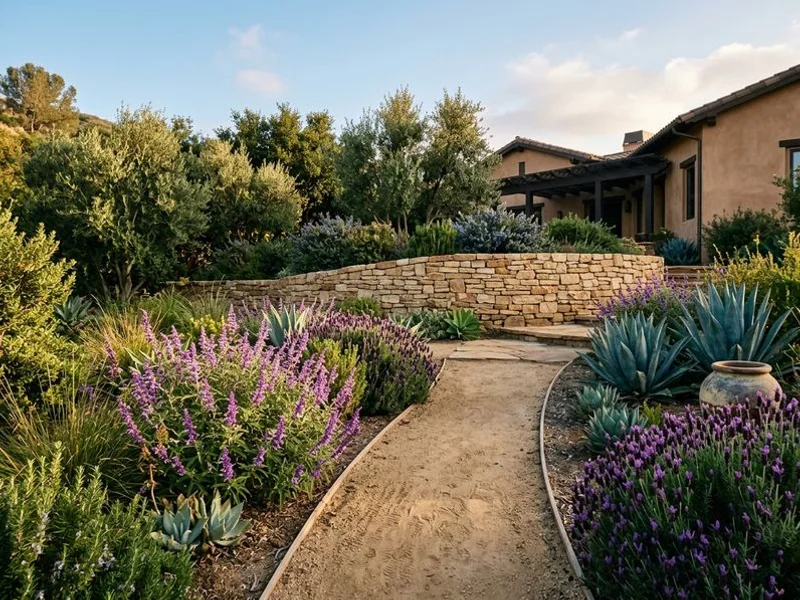
Water-Wise Landscape Renovation for Existing Homes
Renovating the landscape around an existing home is rarely as simple as swapping out a patch of lawn for a few drought-tolerant shrubs. The yard already has habits. Water moves a certain way after a storm. The soil may be compacted from years of foot traffic, heat exposure may be uneven, and an old irrigation system may be delivering water where nothing needs it and starving the places that do. In the San Gabriel Valley and similar Southern California foothill communities, those realities are hard to increase your home's curb appeal ignore. The landscape has to do more than look finished. It has to manage water, fit the slope, support the home’s fire safety needs, and still feel like a place someone actually wants to spend time in.
That is why water-wise landscape renovation is less about a quick makeover and more about a sequence of smart decisions. The best projects usually begin with observation, not demolition. They account for irrigation, soil, sun exposure, and plant selection before the first square foot of turf comes out. They take local conditions seriously, especially where hillside landscaping, drainage, and defensible-space planning overlap. They also recognize that a well-designed yard can reduce maintenance, improve stormwater behavior, and create a stronger visual connection to the San Gabriel Mountains and surrounding foothill character that defines so much of the region.
Start with the yard you actually have
A good renovation begins with a hard look at what is already happening on the property. That sounds obvious, but it is the step many homeowners rush through. A yard can look flat from the kitchen window and still shed water in three different directions. A planting bed might appear dry because the sprinkler coverage is poor, not because the plants are inherently wrong for the site. A sunny front slope may seem like the ideal place for a colorful planting palette, only to prove that reflected heat and wind are punishing enough that delicate species fail within a season.
The California water agency recommends assessing irrigation, soil, sun exposure, and plant selection before removing turf, and that sequence makes practical sense. It is difficult to make durable design choices without understanding how the site behaves now. On some properties, the best first move is an irrigation retrofit. Old spray heads may be overshooting sidewalks, wetting hardscape, or leaving dry pockets in planting beds. A system with broken or mismatched emitters can waste a surprising amount of water over time while still producing poor plant health. Renovation should correct those patterns before or alongside any new planting.
Soil deserves equal attention. Compacted soil often holds water poorly at the surface while starving roots below. On older homes, years of construction activity, foot traffic, and repeated irrigation can leave the top layer crusted and unresponsive. In those cases, better plant selection alone will not solve the problem. The grading, soil condition, and water delivery method all have to work together.
Let the design fit the microclimate
Water-wise landscape design is not about forcing the same plant palette across the entire yard. It works best when the site is divided by microclimate. South-facing areas may run hotter and drier than shaded side yards. Spots near walls, pavement, or masonry can radiate additional heat well into the evening. Wind exposure also matters, especially on open lots or hillside properties where evaporation can be more intense than homeowners expect.
That is where landscape design becomes a practical tool, not just an aesthetic one. The planting plan should reflect how each area behaves, not how the yard looks from a distance. In a front yard, for example, the strongest performers are often plants that tolerate reflected heat, seasonal dryness, and modest irrigation once established. In a shaded side yard, the palette can shift toward different species with lower sun demand and a more restrained watering pattern. A good plan doesn’t fight the site. It reads the site and responds.
The state’s water-wise guidance also points homeowners toward WUCOLS, which helps match plant water needs to California regions. That matters because “drought tolerant” is too vague to be useful on its own. One plant may survive on far less water than turf but still perform poorly if it is placed in the wrong exposure. Another may be described as low-water but still need consistent establishment irrigation before it settles in. The practical lesson is simple. Choose plants for the local climate, the specific exposure, and the long-term water budget of the property.
Turf removal works best when it is part of a system
Many landscape renovations begin with turf removal, and for good reason. Large lawns are often the most water-intensive part of an existing yard, especially when they are underused or poorly maintained. But turf removal should not be treated as the entire project. Replacing grass with bare mulch and a few shrubs usually produces a tired, temporary result. The landscape may use less water, but it will not necessarily function better or look coherent.
A better approach is to think in layers. Once turf is removed, the ground plane needs something stable and intentional. That may mean planted areas, decomposed granite, pathways, stepping stones, or other elements that belong to the yard’s daily use. This is where hardscaping earns its place in the design. Paths, small patios, sitting areas, and retaining elements can reduce irrigated area while giving the landscape a sense of structure. In many existing homes, especially on compact lots, hardscaping provides the bones that make a water-wise layout feel finished rather than sparse.
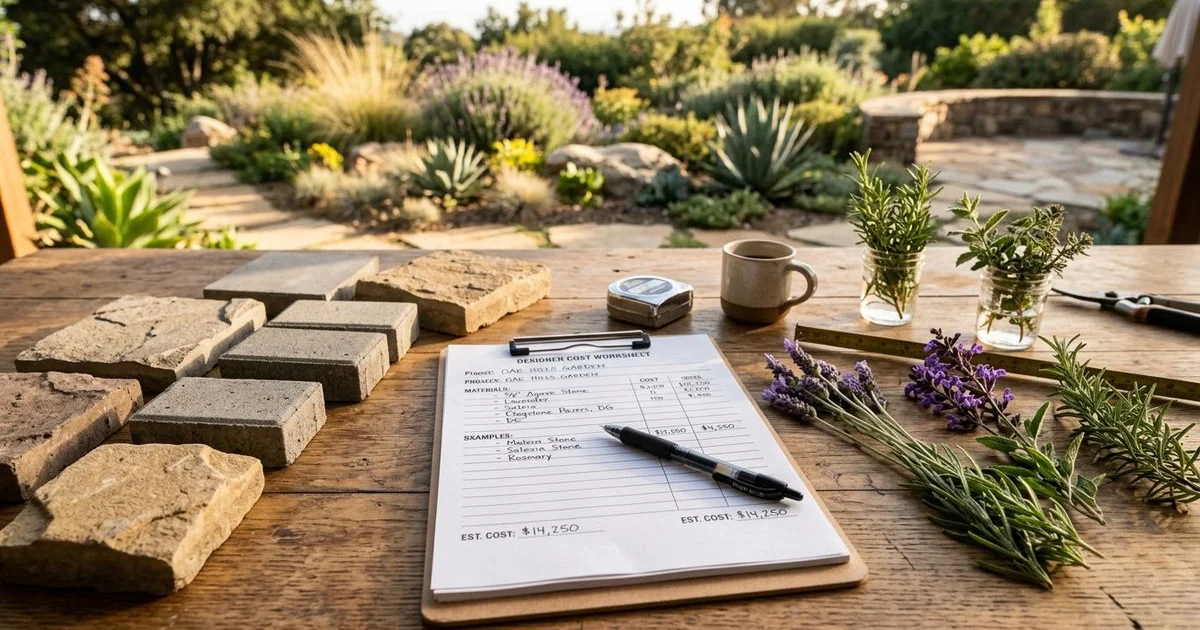
The most successful turf conversions usually avoid the common trap of replacing everything green with everything gravel. Gravel has its place, but too much can raise heat, complicate maintenance, and make the yard feel harsher than necessary. A balanced design uses paving and planted areas together, with enough open space to handle movement, seating, and visual relief.
Hillside properties demand extra discipline
Hillside landscaping changes the rules. Slopes concentrate runoff, increase erosion risk, and can make irrigation harder to control. Water that would soak into a flat yard may move quickly downslope, carrying soil with it. That is why hillside renovation should be planned with drainage and erosion control at the center of the project. Plant choice matters, but so does how the slope is shaped and protected.
On slopes, the goal is to slow water long enough for roots to take hold. That can mean using terracing, small grade changes, planting pockets, or other forms of structure that interrupt runoff. It also means avoiding a layout that leaves large stretches of bare soil exposed during establishment. Freshly renovated hillside areas are especially vulnerable in the first months, when the plants have not yet built enough root mass to stabilize the soil.
The California Native Plant Society has long noted that slopes benefit from erosion control, drought tolerance, and firewise planting. That combination is especially relevant in foothill neighborhoods where views, slope conditions, and wildfire awareness all shape the landscape. Plants for these areas should not just tolerate low water. They should help anchor soil and contribute to a defensible, maintainable planting structure.
In practice, the best hillside landscaping often blends low-growing shrubs, bunchgrasses, and other plants that create a living matrix across the slope. The aim is coverage without clutter. A slope with too many isolated plant pockets can still erode between them. A slope with dense, coordinated planting tends to perform better over time.
Native and climate-appropriate plants do a lot of the heavy lifting
For water-wise renovation, plant selection is where the project either becomes resilient or becomes a maintenance problem. Native and climate-appropriate plants are not automatically the answer to every site, but they are usually the most defensible starting point in Southern California landscapes. They are adapted to the local climate patterns, and many also support habitat value beyond the home garden.
Plants often well suited to the region include California buckwheat, California sagebrush, manzanita, ceanothus, monkeyflower, foothill penstemon, bunchgrasses, and the locally named San Gabriel oak. These species fit naturally into water-wise, habitat-minded gardens, particularly where the goal is to echo the visual character of the San Gabriel Valley and the surrounding foothills. They also give the landscape more seasonal texture than a typical lawn replacement ever could.
That said, plant selection still requires judgment. A species that performs well on a well-drained slope may struggle in a low area that collects water after rain. A shrub that looks neat in a nursery container may need far more space than expected once it matures. Mature size matters, especially in front yards where lines of sight, walkways, and utility clearances all need to remain open.
The best plant palette is rarely the longest one. It is the one that is repeated with enough discipline to create rhythm, mass, and maintainability. Homeowners often ask for variety, but too much variety in a water-wise landscape can create uneven irrigation needs and a patchwork appearance. A smaller, well-edited palette usually ages better.
Firewise decisions belong in the planting plan
In many parts of the San Gabriel Valley, water-wise design and firewise planning are inseparable. The landscaping around a home should not just conserve water. It should also support defensible-space goals and reduce the kinds of continuous fuel conditions that can make a landscape harder to defend. The CNPS San Gabriel Mountains chapter highlights ember-resistant zone rules and native plants suitable for local gardens, which reflects the real overlap between habitat gardening and fire-smart design.
This does not mean the yard has to look stripped down or overly austere. It means plant placement, spacing, and maintenance are part of the design language. Shrubs should not crowd against the house. Planting should leave room for access, pruning, and visibility. The immediate area near the home calls for especially careful choices, while the outer portions of the yard can often carry a more layered, naturalized look.
Fire-resistant planting is not a matter of finding a single magical species. It is a matter of reducing vulnerability through a sequence of decisions. Low-fuel materials near structures, thoughtful irrigation management, and consistent upkeep all matter. A landscape that has been carefully watered but never pruned can still create problems. Likewise, a plant palette that looks firewise on paper may fail in practice if it is installed too densely or allowed to accumulate dead material.
Irrigation retrofits often deliver the fastest payoff
If there is one part of a water-wise renovation that pays back quickly, it is usually irrigation. Existing homes frequently have systems designed for older plantings or for a lawn-heavy layout that no longer fits the property. Heads are often misaligned. Pressure may be uneven. Controllers may be set for habits that no longer make sense. Fixing those issues can dramatically improve how the whole landscape performs.
A retrofit should be matched to the plant zones. Turf areas, if any remain, need different watering patterns than shrubs or native plant beds. Drip irrigation is often a better fit for renovated planting areas because it delivers water directly where roots can use it, without soaking hardscape or encouraging weed growth between plants. But drip is not a cure-all. It still has to be installed, flushed, and adjusted correctly.
In existing homes, irrigation changes can also reveal hidden constraints. Older valves may not support a clean division between planting types. Some areas may need pressure regulation or better coverage to avoid dry spots. On sloped sites, water application has to be paced carefully so it does not run off before it infiltrates. That is one reason landscape renovation and irrigation design should be handled together rather than in separate phases whenever possible.
Stormwater, runoff, and the space between plants
One of the quiet advantages of good landscape renovation is that it improves what happens during storms. Water-wise design is not only about reducing demand during dry months. It also shapes how water moves across the property when rain does arrive. In a renovated yard, the goal is to guide runoff thoughtfully, reduce erosion, and keep water where it can soak in rather than racing toward the street or collecting against the foundation.
This is especially important on older sites where the original grading was never ideal. If a lawn has masked drainage issues for years, removing it can expose the problem quickly. The solution may involve subtle regrading, planting areas that slow flow, or hardscape details that direct water away from sensitive spots. Even plant spacing matters. A landscape with enough canopy and groundcover can soften rain impact and help stabilize soil, while a yard with excessive open earth can erode faster than expected.
The visual result should still feel deliberate. In a well-designed renovation, stormwater function is hidden in plain sight. A planting swale may look like a calm ribbon of vegetation. A slight grade change may be nearly invisible to a visitor but make a major difference after a storm.
HOA rules do not always override water-wise choices
Homeowners in managed communities sometimes assume an HOA can block any landscape change that looks different from turf or traditional ornamental planting. That is not always the case. California water-restriction guidance says homeowners’ associations cannot prohibit certain water-efficient landscaping choices during drought-related restrictions. For renovation planning, that means homeowners should not automatically rule out water-wise plantings, turf reduction, or irrigation upgrades just because the neighborhood has a strong visual standard.
That does not erase community rules, and it does not make design disputes disappear. But it does matter. In practice, a landscape that is carefully designed, well edged, and clearly maintained often passes visual scrutiny much better than a rushed conversion. The more the renovation looks intentional, the less likely it is to be viewed as neglect.
This is another reason professional landscape design helps. A good plan can translate water-wise goals into a form that fits the home, the block, and the neighborhood without sacrificing performance.
A practical sequence keeps the project from drifting
Renovations go off course when the homeowner tries to solve every problem at once. The better sequence is usually to establish the site conditions first, then shape the structure, then choose the plant palette, and finally tune the irrigation. On hillside properties, the drainage and erosion work may need to happen even earlier. On front yards, hardscaping can define circulation before planting fills in around it. In every case, the design should answer the way the site actually behaves.
A sensible renovation often moves through a few checkpoints in this order: observe the yard through heat and rain, correct irrigation issues, address drainage and slope concerns, install structural elements like paths or retaining features, and then plant with enough density to stabilize the design while leaving space for mature growth. That sequence keeps the project from becoming a collection of disconnected fixes.
What people remember most about a good renovation is not the list of materials. It is how the yard feels to live with after the work is done. Water does not waste itself. Plants settle into the right exposures. The slope holds together. The front of the house looks deliberate from the street. Maintenance becomes more predictable, and the landscape begins to look like it belongs to the climate rather than fighting it.
The most durable landscapes are edited, not overloaded
There is a certain temptation, especially after turf removal, to keep adding features until the yard feels “done.” More gravel, more specimen plants, more decorative accents, more edges. But water-wise design tends to reward restraint. A landscape that is carefully edited usually ages better than one trying to prove too much at once.
That does not mean plain. It means legible. The strongest renovations often combine a modest but confident plant palette, a few well-placed hardscaping elements, and enough open structure to let the design breathe. They account for the San Gabriel Valley’s hillside character, its drought pressure, and its fire concerns without turning the yard into a dry placeholder. They use native and climate-appropriate planting where it makes sense, and they respect the work that irrigation and drainage have to do behind the scenes.
A home’s exterior landscape should not be judged only by how green it looks in the first month after installation. It should be judged by how it performs through a full year of sun, wind, heat, and rain. A water-wise renovation that handles those cycles gracefully is not a compromise. It is a better fit for the place.