
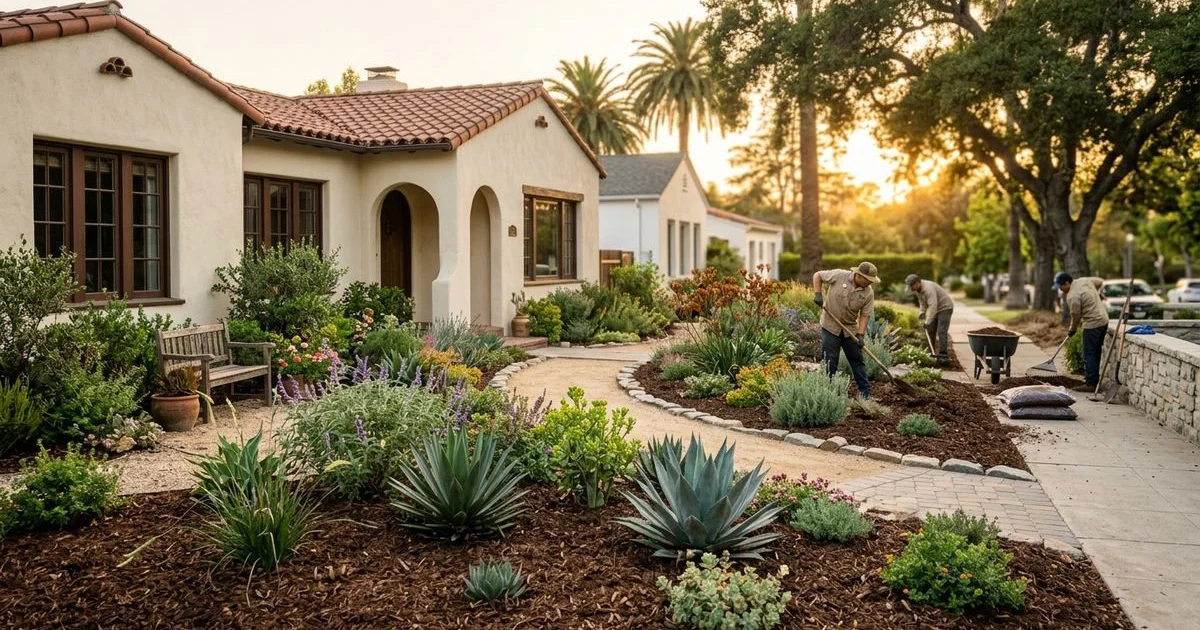
A Guide to Plant Selection for California Water-Wise Yards
A successful California water-wise yard starts long before the first plant goes into the ground. The most common mistake I see is treating plant selection as a shopping trip, when it is really a planning exercise shaped by sun, slope, soil, irrigation, and the way water moves across the property. In the San Gabriel Valley, that matters even more. The region sits at the intersection of intense summer heat, seasonal rainfall patterns, hillside properties, and a strong visual connection to the San Gabriel Mountains, which means the landscape has to do more than look good. It has to hold soil, handle drought, manage runoff, and fit into the professional hardscaping services local fire and water conservation picture.
That is why plant selection is never separate from landscape design. The best water-wise yards do not rely on a few tough plants scattered into a thirsty layout. They are built as systems, with irrigation, hardscaping, drainage, and planting all working together. On a flat lot, that might mean reducing turf and grouping plants by water need. On a slope, it may mean choosing vegetation that helps with erosion control and roots into the hillside instead of washing out of it. Around a home in a higher fire-risk setting, it also means thinking about firewise planting and defensible space from the beginning, not trying to retrofit those concerns later.
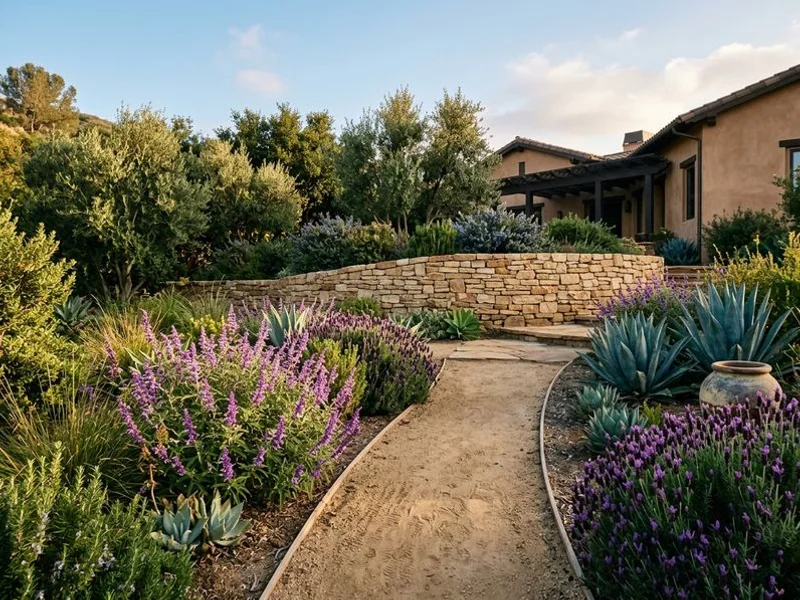
Start with the site, not the plant palette
California water agency guidance points homeowners in the right direction: assess irrigation, soil, sun exposure, and plant selection before removing turf. That order matters. Too many landscape problems are created when turf comes out and the replacement planting plan is chosen in isolation. A yard can be drought tolerant on paper and still struggle if the soil drains poorly, the irrigation is uneven, or the plant choices do not match the actual microclimates on the property.
Sun exposure is often the easiest variable to overlook because it changes over the course of the day and across the season. A front slope that bakes in afternoon sun is a different environment from a side yard shaded by a wall or a tree. In the San Gabriel Valley, that difference can be decisive. A plant that performs well in morning sun and protected conditions may fail when placed on a hot, reflective edge near paving or hardscaping. The same principle applies to soil. A rocky hillside, compacted fill, and richer planting bed all behave differently when irrigation is applied. Water-wise plant selection only works when those differences are acknowledged.
The practical test is simple: map the property into zones based on exposure and water behavior. Look for where water collects, where it runs off, where it disappears fastest, and where there is reflected heat from walls, driveways, or hardscape. That kind of observation usually tells you more than any plant label.
Water-wise does not mean one type of plant
People sometimes hear “drought resistant landscaping” and assume the answer is a sparse, desert-style yard. That is a narrow view. California water-wise landscapes can be rich and varied. They can include layered natives, flowering shrubs, bunchgrasses, and groundcovers that support a natural look while using significantly less water than a traditional lawn. The key is matching the plant to the site and the maintenance expectations.
The state’s Model Water Efficient Landscape Ordinance is part of why this matters. New and renovated landscapes are expected to meet water efficiency standards, and the direction is clear: use climate-appropriate plants, native species where they fit, alternative water sources where feasible, and efficient irrigation. For homeowners, that means plant selection is not just an aesthetic decision. It affects compliance, long-term water demand, and how much labor the yard will require once it is established.
A useful way to think about plant choice is in terms of function. Some plants are chosen for structure, some for slope stability, some for seasonal color, and some for habitat value. California sagebrush may play one role in a naturalistic composition. Bunchgrasses may help stitch a slope together visually and physically. Monkeyflower can bring color without asking for high water use. Ceanothus can contribute a strong seasonal presence, while manzanita adds evergreen structure. California buckwheat has a place where a lighter, more open texture is useful. Each one works best when given the right position, rather than being forced to perform every job at once.
The plant list should follow the microclimate
Microclimate is the word that separates thoughtful landscape design from generic planting. A single property can contain several distinct growing conditions. The south-facing edge may be much hotter than the north side. A pocket near masonry can be significantly drier and warmer than an open bed. On a hillside, the upper portion may dry out faster than the lower portion, while runoff can concentrate in one band and leave another section thirsty.
That is why plant selection by microclimate is one of the most practical habits in drought resistant landscaping. Instead of asking which plant is “best,” ask which plant is best for this exact place. A ceanothus that does beautifully in an open, well-drained zone may struggle if the soil stays too wet. A manzanita planted where drainage is poor can decline even if the species is otherwise well suited to the region. Bunchgrasses may be effective on slopes and transitional areas, but they should still be matched to irrigation and exposure. The same goes for foothill penstemon, which can add color and habitat value when placed in the right conditions and not overwatered.
This is where experienced designers spend most of their time. They are not just selecting pretty plants, they are matching behavior to conditions. That judgment saves money later, because a well-matched planting needs fewer replacements, less corrective pruning, and less water to keep it alive.
Hillside landscaping calls for a different mindset
Hillside landscaping in the San Gabriel Valley brings its own set of priorities. A slope is not merely an aesthetic feature. It is a surface that sheds water, warms quickly, and can erode if it is left underplanted or planted with species that do not anchor it well. California Native Plant Society guidance on hot, sunny slopes makes the point clearly: slopes need erosion control, drought tolerance, and firewise planting. That combination should guide every plant decision on a hill property.
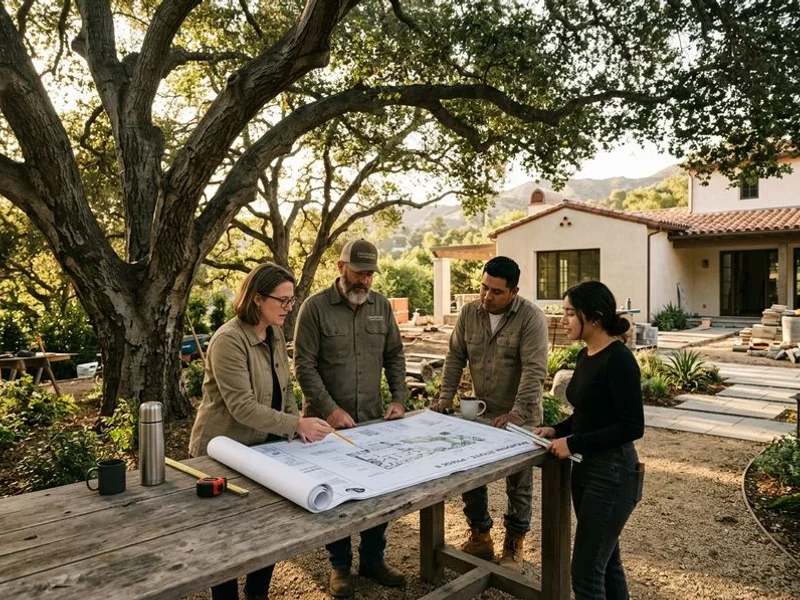
The ideal hillside planting is not uniform. It is layered enough to slow water, hold soil, and reduce exposed ground. In practical terms, that means using a mix of shrubs, grasses, and low spreaders rather than relying on one repeating plant. Root structure matters. So does canopy density. Some plantings do well because they intercept rainfall and reduce the force of runoff. Others work because they knit the soil surface together. The goal is to create a living cover that cooperates with gravity instead of fighting it.
Hardscaping also becomes part of the answer here. On a slope, a path, terrace, retaining edge, or other hardscape element may help control flow and make maintenance safer. But hardscaping should not replace planting, it should work beside it. A landscape that depends too heavily on hard surfaces can increase heat and runoff. A balanced hillside design uses hardscaping strategically, then fills the rest with appropriate plants that tolerate the site and protect the soil.
Firewise planting and defensible space are part of the selection process
In the foothills and hill neighborhoods surrounding the San Gabriel Valley, firewise thinking is not optional. The CNPS San Gabriel Mountains chapter highlights ember-resistant zone rules and local native plants suited to regional gardens, which is a useful reminder that fire-resistant planting is not the same thing as a sterile or unattractive yard. You can still build a landscape with texture, seasonal bloom, and a strong sense of place. You just need to choose and place plants carefully.
Firewise landscaping starts with spacing, maintenance, and plant form, not just species name. Many native plants can be used well when they are maintained properly and not packed into a configuration that encourages ignition to move quickly through the property. The selection process should consider mature size, growth habit, and how close planting will sit to structures. That is especially important near windows, entries, and other vulnerable areas.
A yard can be both water-wise and fire-conscious if the design is disciplined. I have seen properties where the plant palette was excellent, but the arrangement put dense shrubs too close to the house. I have also seen modest plant choices look much stronger because the designers respected clear zones, used clean hardscaping transitions, and kept the planting structure simple near the building. The lesson is straightforward: the right plants still need the right placement.
A practical way to narrow the options
When the list of possible plants gets too long, it helps to evaluate candidates against a few real-world questions:
- Does the plant fit the sun exposure and heat level of the site?
- Will it handle the drainage and soil conditions already present?
- Is it appropriate for slopes, runoff, or erosion-prone areas?
- Does its mature size make sense near the house, paths, or hardscaping?
- Does it support water-wise, firewise, and maintenance goals at the same time?
Those questions do more than filter a plant list. They reveal which parts of the landscape are doing the heavy lifting. A plant that looks perfect in a nursery may be the wrong answer for a slope or a reflective courtyard. A plant that seems plain in isolation may become valuable once it is used to stabilize a grade or support a broader native habitat garden.
Turf removal works best when replacement is planned first
Turf removal is often the moment when homeowners finally commit to water conservation, but it is also where mistakes become expensive. California guidance makes it clear that irrigation, soil, sun exposure, and plant selection should be reviewed before turf comes out. That is sensible because a removed lawn leaves a gap that needs a purpose. If the replacement plan is weak, the landscape can end up with exposed soil, uneven watering, and patchy plant survival.
The right approach is to treat turf removal as part of a larger renovation. Decide where lawn actually serves a function and where it does not. Some yards need a small play area or circulation space, but many legacy lawns can be replaced with plant beds, groundcover, or a mix of planting and hardscaping that uses less water and looks more coherent. In many cases, the best result is not an all-plant solution. It is a balanced composition that reduces turf, improves drainage, and creates usable outdoor space without forcing the yard to behave like a park.
This is also where irrigation retrofits matter. If the old system was designed for turf, the new planting plan may not get water where it needs it, or may get too much. Efficient irrigation should be tailored to the plant zones rather than assumed to work automatically. A water-wise yard with poor irrigation design is still a poor system.
Native plants and habitat value add depth, not just efficiency
California native plants do more than save water. They help a yard feel rooted in the region. In the San Gabriel Valley, that local connection matters because the surrounding landscape is not abstract. The San Gabriel Mountains are a key geographic anchor, and they hold habitat for many rare, threatened, and endangered species. A home landscape cannot replicate that habitat, but it can support the broader ecological character of the area.
That is one reason native habitat gardening has become such an important part of landscape design. Plants like California buckwheat, California sagebrush, manzanita, ceanothus, monkeyflower, foothill penstemon, and bunchgrasses can create a garden that feels specific to place rather than imported from somewhere else. San Gabriel oak, as a locally named native species, reinforces that same regional identity. These plants also tend to make sense in water-wise planning because they are adapted to California conditions and can fit into a conservation-minded yard when matched to the right microclimate.
The best native gardens are not random collections of species. They are designed with rhythm, texture, and seasonal change in mind. Even a modest yard can gain depth when plants are grouped by water need and visual function. A mixed planting of shrubs and grasses, for example, can soften edges and reduce the starkness that sometimes comes with hardscaping-heavy designs. Used carefully, natives also help a property feel less forced, which is one reason they age well.
Local rules and local realities shape the final choice
Landscape decisions in California do not happen in a vacuum. The statewide water efficiency framework means water-wise design has regulatory relevance, not just environmental value. There is also a practical HOA dimension. California water-restriction guidance states that homeowners’ associations cannot prohibit certain water-efficient landscaping choices during drought-related restrictions. That matters for homeowners who worry that a new planting plan might be blocked simply because it looks different from the neighborhood standard.
Even so, the smartest path is not to assume compliance will solve design problems. It won’t. A plant can meet a conservation standard and still be a poor fit for a narrow side yard or a steep slope. Similarly, a garden can satisfy a water goal but fail visually if it ignores the hillside character common in the San Gabriel Valley. Strong landscape design respects both the rulebook and the terrain.
That is where experience pays off. You can usually tell when a landscape was assembled by checklist versus designed from site conditions. The first looks fragmented. The second feels inevitable. In the best water-wise yards, the plants seem to belong there because they truly do. The grading, the hardscaping, the irrigation, and the planting all support the same outcome.
Choosing plants with the long view
Plant selection for a California water-wise yard is really an exercise in restraint and precision. The goal is not to cram in every species that tolerates drought. It is to choose a smaller number of plants that are appropriate, durable, and suited to the way the site actually behaves. When that is done well, the yard uses less water, holds up better on slopes, supports better drainage, and fits the regional character of the San Gabriel Valley.
The most reliable landscapes are usually the least dramatic at the start and the most satisfying over time. They establish steadily, demand less correction, and settle into a rhythm with the property. That is the mark of good landscape design. It respects the land, it does not fight the climate, and it keeps the yard usable without asking for more water than the site can justify.