
A Guide to Water-Smart Landscaping for Renovated Properties
Renovated properties rarely start with a clean slate. More often, they arrive with tired turf, compacted soil, awkward drainage, and a mix of old plantings that no longer fit the house, the slope, or the way water is managed in California now. That is exactly why water-smart landscaping matters so much after a renovation. When a property has already been disturbed by construction, the landscape should not be treated as decoration added at the end. It should be shaped as part of the property’s long-term performance, especially where water use, hillside stability, and firewise decisions all intersect.
In places such as the San Gabriel Valley, the stakes are especially clear. The regional landscape is defined by slopes, foothill views, and properties that often need to handle runoff, sun exposure, and heat all at once. A successful design in that setting does more than look polished. It conserves water, helps hold soil in place, and creates a yard that can adapt to local conditions rather than fight them.
Start with the site, not with the plant palette
One of the most common mistakes I see on renovated properties is jumping straight to plant selection before the site has been properly read. That usually leads to plants that look good on paper but perform poorly in real life. California water guidance is very clear on the order of operations. Before removing turf or choosing replacements, assess irrigation, soil, sun exposure, and plant needs. That sequence matters because water-smart landscaping is as much about where water goes as it is about what is planted.
A property with full afternoon sun, for example, will place very different demands on plant material than a shaded courtyard or a north-facing slope. Soil conditions matter too. After renovation, soils are often disturbed, compacted, or uneven in their ability to absorb water. If irrigation is left unchanged, the landscape can end up with dry pockets, oversaturated spots, and runoff that moves across hard surfaces instead of soaking in where it should.
This first pass through the site should be practical and unsentimental. Where does water leave the property? Which areas bake in the sun? Where is the soil thin or unstable? Which parts are most visible from the street and need to support the overall character of the house? Those observations shape every later decision, from grading to planting density.
Water-wise design is not one decision, it is a system
People often think of drought resistant landscaping as a matter of choosing a few tough plants and reducing lawn. That is part of it, but not the full picture. A durable water-smart landscape is a system made up of irrigation, plant selection, soil management, and hardscaping that all work together. If one part is out of balance, the whole design underperforms.
This is where water-efficient design guidance in California becomes especially relevant. The state’s Model Water Efficient Landscape Ordinance places real attention on how renovated landscapes use water, and it encourages climate-appropriate plants, efficient irrigation, and alternative water sources where appropriate. For a renovated property, that means the landscape should be planned with water demand in mind from the start, not retrofitted later as an afterthought.
The strongest projects tend to share a few traits. They group plants by water need rather than scattering them randomly. They use irrigation that delivers water where roots can actually use it. They reduce thirsty turf in places where it does not serve a strong purpose. And they treat exposed soil, slopes, and runoff routes as design problems, not just maintenance issues.
Turf removal is useful, but only when replacement areas are planned well
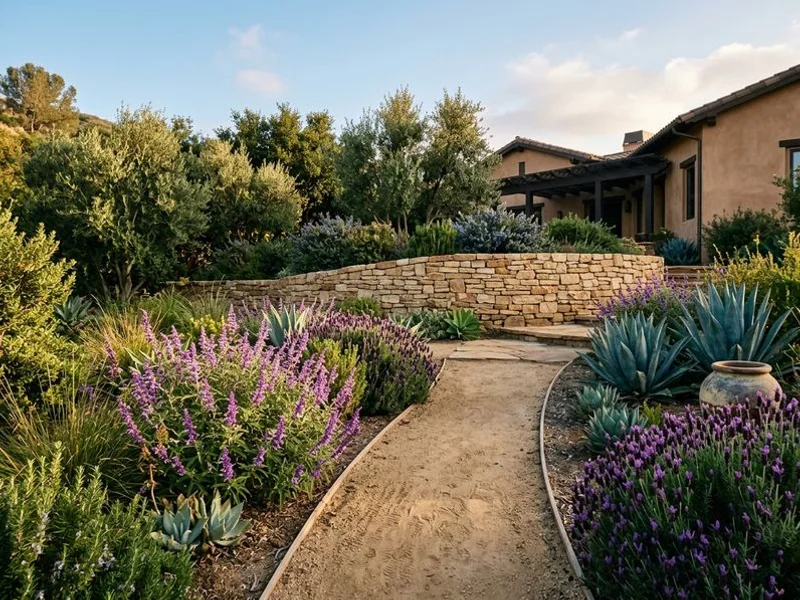
Turf removal often becomes the starting point for a renovation, and for good reason. Lawns can consume a great deal of water, especially when they are installed in hot, sunny areas that were never ideal for grass in the first place. But removing turf without planning the replacement zone can create a different set of problems. Bare soil erodes. Mulch shifts. Irrigation becomes inconsistent. The result is a yard that looks unfinished and functions worse than the lawn did.
The better approach is to decide what each former turf area should do. Some spaces should become planted beds with climate-appropriate species. Others may be better suited to hardscaping, gathering space, or simple open ground that is stabilized and ridgelineoutdoorliving.com easy to maintain. In renovated properties, that decision often depends on how the family actually uses the yard. A side yard that was mowed out of habit may be more valuable as a permeable path or a service area. A front patch with little use may be a strong candidate for low-water planting that supports the architecture instead of competing with it.
Turf removal also creates a good opportunity to correct irrigation coverage. When sprinkler heads were laid out for broad lawn coverage, they usually are not appropriate for mixed planting beds. Adjusting that system at the same time prevents water waste and helps new plants establish more evenly.
The role of hardscaping in a water-smart renovation
Hardscaping is sometimes treated as the opposite of landscape design, but on renovated properties it is often what makes water-smart planting possible. Walkways, retaining edges, patios, decomposed stone paths, and other hardscape elements organize circulation and reduce the amount of irrigated area that needs regular attention. On a hillside property, hardscaping can also help manage slope changes and create safe, usable spaces where planting alone would be too vulnerable.
The key is restraint. Too much hard surface can increase runoff and create heat. Too little can leave a property hard to navigate and harder to maintain. The balance changes from site to site, but the goal stays the same: make the landscape work with the property’s natural shape rather than forcing everything to behave like a flat suburban lawn.
On foothill and hillside properties, hardscaping often becomes part of erosion control. A well-placed retaining wall or terrace can reduce slope pressure and create planting pockets that are easier to irrigate efficiently. A thoughtfully designed path can direct foot traffic away from fragile soil. Even a simple change, such as replacing a sloped stretch of turf with a stable surface and low-water planting, can dramatically improve water performance over time.
Hillside landscaping needs an extra layer of judgment
Hillside landscaping deserves its own discussion because slopes behave differently from flat ground. Water moves faster. Soil is more exposed. Plants have less room for root establishment if the slope is poorly prepared. In the San Gabriel Valley, where hillside visual character is part of the regional landscape, these challenges are not edge cases. They are common realities.
For sloped sites, erosion control comes first. That means paying attention to soil cover, plant spacing, and how runoff travels during a storm or even a heavy irrigation cycle. Drought tolerance is important, but it should never be the only criterion. A plant that survives dry conditions but fails to hold soil or creates maintenance problems is not a strong hillside choice.
Firewise planting also matters on slopes. The most successful hillside landscapes are not barren. They use plant structure and spacing intelligently, often mixing shrubs, groundcovers, and bunchgrasses to create coverage that helps stabilize soil without building excessive fuel load. The aim is a landscape that is visually light, ecologically appropriate, and easier to maintain under dry conditions.
In practice, this means the slope should be designed in layers. Rooting depth, canopy spacing, access for maintenance, and irrigation placement all have to be considered together. A hillside that is beautiful from the street but impossible to water evenly will not hold up for long.
Choosing plants that fit the region
Plant selection should follow climate, slope, and sun exposure, not fashion. California native plants are often an excellent fit for renovated properties because they are naturally adapted to local conditions, but even among natives, placement matters. The right plant in the wrong microclimate can still fail.
For San Gabriel Valley properties, regionally appropriate choices often include California buckwheat, California sagebrush, manzanita, ceanothus, monkeyflower, foothill penstemon, and bunchgrasses. San Gabriel oak is also a locally named native species. These plants fit well when they are matched to the site conditions they evolved for, including sun, drainage, and slope.
That said, native plantings are not a one-size-fits-all answer. A plant that thrives on a hot, open slope may struggle in a narrow side yard with limited light. A shrub that works beautifully in a larger planting area may overwhelm a compact entry bed. Good landscape design respects those differences. The goal is not simply to use natives, but to use the right native or climate-appropriate plant in the right place.
WUCOLS remains a useful reference point when evaluating plant water needs by region. It helps prevent the common mistake of treating all drought tolerant landscaping as if it requires the same level of water or maintenance. It does not. A landscape built from plants with similar water needs is easier to irrigate efficiently, easier to maintain, and less likely to develop uneven growth patterns.
Firewise landscaping and water-smart design can work together
Some homeowners still assume that firewise planting and attractive landscaping are in tension, but that has not been my experience. The two goals can reinforce each other when the design is disciplined. Fire-resistant planting, defensible-space planning, and careful maintenance all fit naturally within a water-smart framework.
In the San Gabriel Mountains and surrounding foothill areas, fire concerns are not abstract. Local guidance emphasizes ember-resistant zone rules and the use of native plants suitable for area gardens. That makes the case for thoughtful spacing, species selection, and ongoing cleanup even stronger. Landscapes should not rely on dense, flammable massing where lower-maintenance, lower-water plant structure will do the job more safely.
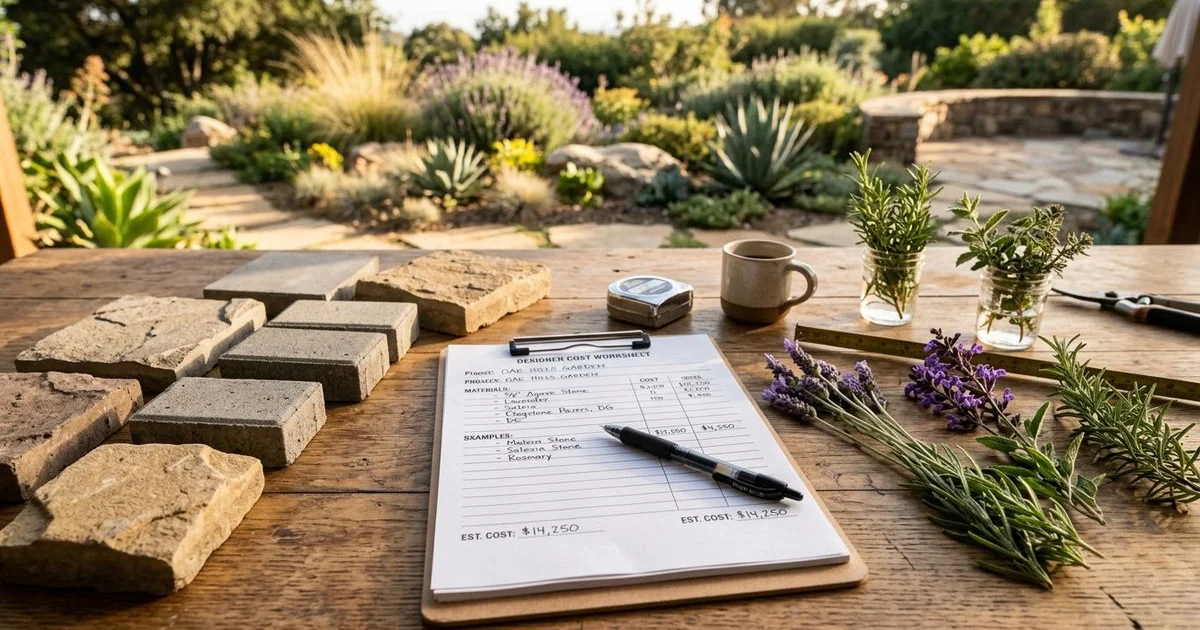
The most effective firewise landscapes are usually the most legible. They make it easy to see what is planted, how it is spaced, and where maintenance access is needed. Overgrown shrubs, tangled groundcover, and hidden debris can all work against both fire resilience and irrigation efficiency. A cleaner design is often a safer and more durable one.
Irrigation retrofits deserve as much attention as planting
A new plant palette will not save water if the irrigation system still behaves like it is serving a different landscape. On renovated properties, irrigation retrofits are often one of the highest-value changes available. This can mean replacing old spray patterns, correcting uneven coverage, adjusting run times, or separating zones so plants with different needs are not watered together.
The most common failure I see is overwatering from habit. A system set up for lawn is left running that way after the lawn has been removed. Another problem is poor distribution on slopes, where water can run off before it soaks in. Efficient irrigation should be tailored to the terrain. That may mean shorter cycles, more targeted delivery, or a revised layout entirely.
It helps to think of irrigation as infrastructure, not an accessory. If the pipes, emitters, and scheduling are not aligned with the new landscape, the plant choices will be forced to compensate. That leads to weak roots, wasted water, and uneven appearance. A renovated property deserves better than that.
HOA rules should not stop water-efficient choices
Homeowners in association-governed communities sometimes assume that an HOA can block certain landscaping changes during water restrictions. California guidance says otherwise in specific cases, homeowners’ associations cannot prohibit certain water-efficient landscaping choices during drought-related restrictions. That matters because many property owners delay needed upgrades out of fear that they will run into conflict before the work even begins.
This is one of the reasons it is worth documenting the landscape plan carefully. If a property is moving toward drought tolerant landscaping, the design should show that the changes are intentional, efficient, and tied to water conservation rather than cosmetic preference alone. That kind of clarity helps when discussing material changes with an HOA, contractor, or landscape professional.
A practical order of operations for renovated properties
On a project that has already gone through renovation, sequencing matters as much as the design itself. The work tends to go more smoothly when the property is approached in a logical order. First, evaluate the site conditions, including soil, sun, slope, and existing irrigation. Second, correct grading and drainage issues before planting. Third, decide where hardscaping will support circulation, erosion control, or usable outdoor space. Fourth, choose plants based on water need, slope behavior, and microclimate. Fifth, install or retrofit irrigation so it matches the new layout.
That sequence sounds simple, but skipping steps creates expensive repairs later. Planting before drainage is corrected often means rework. Installing new irrigation before final grading can produce coverage problems. Treating a hillside as if it were flat can lead to erosion and plant loss after the first heavy weather.
What a strong finished landscape feels like
The best water-smart landscapes do not announce themselves with gimmicks. They feel settled. The transitions between hardscaping and planting are clear. The slope looks intentional rather than patched. The planting palette feels rooted in the region rather than imported from somewhere else. Water is used where it will do the most good, not sprayed across surfaces because that is how the old system happened to work.
On a renovated property in the San Gabriel Valley, that kind of landscape also helps the house relate more honestly to its surroundings. It respects the hillside character of the area. It responds to drought, sun, and soil with practical judgment. It can be maintained without constant correction. And when designed well, it still offers texture, shade, bloom, and a sense of place.
Water-smart landscaping is not about stripping a property down to something severe or sparse. It is about editing with discipline. That is often the difference between a landscape that merely survives and one that feels appropriate to the property for years to come.