

The Ultimate Guide to Hardscaping in Glendale, CA: Plant Selection for Drought-Tolerant Hardscapes
Hardscaping in Glendale is not just a question of stone, gravel, walls, and patios. The best projects in this city depend just as much on what gets planted around those materials as on the materials themselves. A paved courtyard without shade can feel harsh by midafternoon. A slope covered only in decorative rock can look finished for a few months, then begin to feel sterile. A front yard converted from lawn to gravel landscaping may save water, but if the plant selection is thin or poorly placed, the property can lose curb appeal and become hotter, dustier, and harder to enjoy.
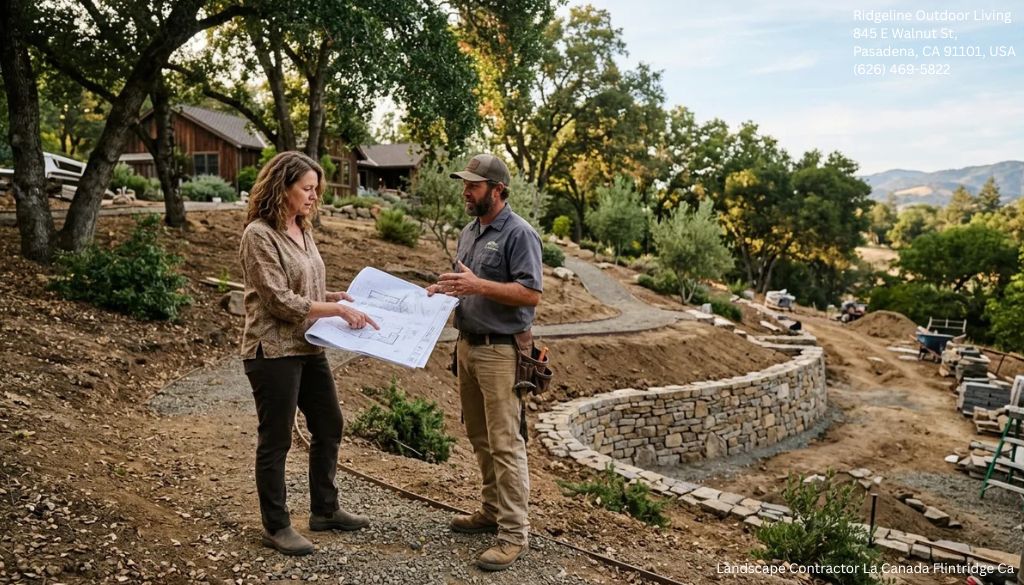
Glendale asks a lot from a landscape. Winters are mild, summers are hot, and outdoor water use is a major conservation concern. The city’s own water-saving guidance points residents toward California-friendly and California native plants because they fit this climate better than thirsty ornamental landscapes. They can reduce outdoor watering, lower water bills, cut pesticide use, and reduce routine maintenance. That is the foundation of good drought tolerant landscaping here.
The practical challenge is balance. A successful hardscape should reduce unnecessary turf and overly paved areas, preserve water permeability where possible, and still feel like a garden. Plants soften concrete, cool patios, anchor gravel areas, and make modern landscaping feel intentional rather than bare. In Glendale, the strongest landscape design usually starts with the hardscape layout, then uses drought-tolerant planting to make the space livable.
Why Glendale hardscapes need plants, not just surfaces
A common mistake in landscape renovation is treating hardscape as a replacement for planting. A lawn comes out, a weed barrier goes down, decorative rock goes in, and a few plants are added as decoration. The result may look clean on installation day, but it often lacks depth. It can also create maintenance issues that surprise homeowners later.
Hard materials behave differently from living ground cover. Paving sheds water unless it is designed to let water pass through. Rock mulch can protect soil and reduce evaporation, but it does not perform like a living plant canopy. Bare gravel can collect leaves and sediment, and without enough planting, it can make the yard feel visually flat. Glendale’s own single-family landscape guidance encourages native or drought-tolerant landscaping and asks site design to maximize water permeability by reducing paved areas. That principle matters. A water wise landscaping project should not simply replace green space with impervious surface.
Plants give hardscapes scale. In backyard landscaping, they define the edge of a seating area, soften retaining conditions, and separate a dining patio from a utility zone. In front yard landscaping, they help a low-water property feel welcoming instead of stripped down. In small yard landscaping, plants can create the illusion of more space by layering height and texture against walls, fences, and paths.
The best drought-tolerant hardscapes I have seen in Southern California settings do not try to make the garden disappear. They reduce lawn, tighten irrigation, use mulch intelligently, and let the planting carry the character of the space.
The Glendale water reality behind landscape planning
Glendale Water & Power emphasizes that a large amount of the city’s potable water is used for landscaping. That means outdoor water decisions matter at the household level and at the city level. A single yard may feel small, but across a neighborhood, irrigation habits shape demand.
The city promotes replacing turf with water-efficient plants and notes that turf requires weekly care. That is an important point for homeowners who are weighing lawn care against a lower-water garden. A conventional lawn is not just a water commitment. It usually brings mowing, edging, feeding, repairs, and seasonal attention. When turf fails in hot weather or under watering restrictions, it can become patchy quickly, which is when many people start considering sod installation again or look at artificial turf and synthetic grass as alternatives.
Those choices deserve careful thought. Sod installation can restore a lawn quickly, but it does not solve the long-term water and maintenance issue if the goal is low maintenance landscaping. Artificial turf and synthetic grass remove mowing and can reduce irrigation, but they are still hardscape-adjacent surfaces in how they function. They do not offer the same soil, habitat, cooling, or seasonal qualities as drought-tolerant plants. For some households, a small artificial turf area may make sense for a specific use, but it should not be treated as the only water-wise option.
Glendale’s water-saving recommendations are clear enough to guide ordinary decisions. Check irrigation systems for leaks. Use drip irrigation where appropriate. Add mulch. Water before 9 a.m. Or after 6 p.m. Water landscape only one day a week in winter. Those are not glamorous landscape maintenance tips, but they often determine whether a drought-tolerant garden succeeds after the contractor leaves.
Starting with the hardscape plan
Good landscape planning begins with how people actually move through the property. Where do guests enter? Where does the trash route run? Where does a person stand while unlocking the front door? Where does the afternoon sun make a patio uncomfortable? Which areas need to stay open, and which can become planted?
In Glendale, I would be cautious about overpaving simply because a homeowner wants less maintenance. Reducing turf is often smart, but replacing every open area with concrete can work against water-wise goals. Permeability matters. When possible, gravel, planted beds, and mulched areas can help reduce the extent of solid paving. That does not mean every project must avoid patios or walkways. It means the paved area should earn its place.
A front yard might need a clean path from sidewalk to entry, a small landing at the door, and a service route to the side gate. Beyond that, planting and permeable surfaces can often do more for the property than another slab. A backyard may need a dining terrace, but the corners and fence lines usually benefit from planting rather than continuous hard surface. The design question is not “How little can we landscapers Glendale CA maintain?” It is “What should be built, what should be planted, and what should remain open?”
Modern landscaping in Glendale works best when the lines are simple but not empty. A rectangular patio can look crisp with drought-tolerant planting along one or two edges. A gravel courtyard can feel finished when plants are grouped with enough mass to read from the street. A decomposed or decorative rock area can work when it is treated as part of a garden design, not as filler.
Plant selection for drought-tolerant hardscapes
Plant selection should begin with climate fit. Glendale’s mild winters and hot summers favor California-friendly and native California plants. The city specifically encourages those plants because they are suited to local conditions and can help reduce watering, maintenance, water bills, and pesticides. That is a strong argument for choosing plants based on adaptation rather than novelty.
A drought-tolerant plant is not automatically a no-water plant, especially during establishment. Even water-efficient landscapes need irrigation planning. The difference is that, once established and managed properly, the plant palette should demand less frequent watering than conventional high-water landscapes. Glendale’s turf-replacement materials note that native plants can survive drought with about 20 gallons of water per month. That figure is useful because it helps homeowners understand the scale of potential savings compared with thirsty turf, but it should be applied with judgment. Plant size, soil conditions, exposure, and establishment stage all affect water needs.
The most reliable approach is to group plants by water need and exposure. Plants that can handle drier conditions should not be placed on the same drip zone as plants that need more regular moisture. Sun exposure matters as much as water. A plant that performs well in one part of a Glendale property may struggle against a west-facing wall or near reflective paving. Hardscape changes microclimates. Stone, concrete, gravel, and walls absorb and reflect heat. Planting pockets near these materials need careful attention.
A common error is using too few plants in a new xeriscaping project. Homeowners sometimes worry that adding more plants will increase water use, so they scatter small specimens far apart in a sea of rock. In practice, a sparse design can be harder to keep attractive. Soil remains exposed, weeds find open space, and the yard never develops the layered look that makes drought tolerant landscaping feel mature. A better strategy is to choose the right plants, irrigate efficiently, mulch well, and allow the planting to cover enough ground to stabilize the design visually.
Matching plants to hardscape elements
A patio needs shade, softness, and definition. A path needs visibility and clearance. A driveway edge needs toughness. A slope needs erosion-conscious planning, especially where foothill and fire-prone conditions are part of the property context. Glendale public materials emphasize native plants and reduced watering in foothill and fire-prone areas, connecting landscape choices with local slope and fire conditions. That does not mean every hillside should receive the same plant palette. It does mean plant selection should be tied to site conditions rather than chosen from a generic catalog.
Near walkways, avoid plants that will constantly spill into circulation and require clipping. Low maintenance landscaping is often less about choosing “maintenance-free” plants and more about placing plants where their natural size and habit make sense. If a plant wants to grow wide, do not put it six inches from a narrow path. If a plant drops litter, avoid placing it over a water feature or tight gravel strip where cleanup becomes tedious. If a plant needs frequent shaping to look acceptable, it may not belong in a water wise hardscape.
Around decorative rock, plants should be placed with enough soil volume to thrive. Rock can be attractive, but it should not be treated as soil preparation. A planting hole surrounded by compacted subgrade and covered with stone is not a healthy growing environment. Soil preparation still matters. The soil should accept water, support roots, and work with the irrigation system. Mulching matters too. Glendale’s water-saving tips specifically recommend adding mulch, and for good reason. Mulch helps reduce evaporation and supports a more stable root zone.
There is also a visual issue. Gravel landscaping can look refined when plant forms contrast with the stone. Fine-textured plants can soften gravel. Bolder forms can create focal points. Repetition helps. A hardscape with too many unrelated plant types can feel busy, while one with too few can feel unfinished. The sweet spot depends on yard size. In small yard landscaping, restraint usually wins. In a larger backyard, repeated plant groupings can guide the eye and make the space feel cohesive.
A practical plant selection framework
The following framework is useful during early landscape planning, before anyone starts buying plants or ordering stone.
This is not a substitute for professional judgment, but it keeps the conversation grounded. When a client brings a folder of landscaping ideas, the images often show mature gardens photographed in ideal light. The real work is translating that look into a site that can survive Glendale heat, comply with water-wise priorities, and remain manageable over time.
Soil preparation is where many projects succeed or fail
Hardscape crews and planting crews often work on the same site, but their priorities can collide. Hardscape installation involves excavation, compaction, base material, drainage decisions, and heavy equipment. Planting requires soil that roots can penetrate and water can move through. If the planting areas are treated as leftover spaces after the hardscape is complete, the garden starts at a disadvantage.
Soil preparation should be discussed before construction begins. Where will planting beds be located? Will machinery compact those areas? Will imported material be needed? Can water reach the root zone, or will it run off the surface? These questions are not decorative. They affect plant survival.
In drought-tolerant landscapes, people sometimes assume poor soil is acceptable because the plants are “tough.” That is a mistake. Water-wise plants still need a healthy start. If the soil sheds water or traps it in the wrong way, even appropriate plants can fail. Good preparation allows drip irrigation to work as intended and helps mulch perform properly.
Mulching is one of the simplest landscape maintenance tips, but it is often done poorly. A thin sprinkle of material is not the same as a functional mulch layer. At the same time, mulch should not be piled against plant crowns or used to hide bad grading. Organic mulch and decorative rock serve different visual and practical roles, and the best choice depends on the design. Decorative rock can fit modern landscaping and gravel landscaping beautifully, but planted areas still need a root-zone strategy, not just a surface treatment.
Irrigation systems for water-wise hardscapes
A drought-tolerant garden is only as good as its irrigation plan. Glendale recommends drip irrigation, leak checks, mulch, and watering during cooler parts of the day, before 9 a.m. Or after 6 p.m. Those basics are worth repeating because they prevent many failures.
Drip irrigation is especially useful in hardscaped gardens because it can deliver water near plant roots without spraying paving, walls, or gravel. Overspray is wasteful and can stain surfaces. Leaks can be harder to notice under mulch or rock, so inspection should become part of regular landscape maintenance. A small leak may not look dramatic, but over weeks it can waste water and create unhealthy wet spots.
Winter watering deserves attention. Glendale advises watering landscape only one day a week in winter. That seasonal adjustment is important. Many irrigation systems are set during installation and never changed, which means plants may receive too much water in cooler months and too little during hot periods. Water wise landscaping requires observation. The controller matters, but the person checking the garden matters more.
Rain landscaping near me barrels also belong in the conversation. Glendale encourages rainwater use through rain barrels as a way to conserve water for gardens and trees. Rain barrels will not replace a complete irrigation system for most landscapes, but they can supplement watering and make homeowners more aware of rainfall as a resource. In a hardscape renovation, it is worth thinking about where roof runoff goes and whether stored rainwater can support nearby planting.
Turf removal, lawn alternatives, and the role of artificial turf
Turf replacement is one of the most visible forms of landscape renovation in Glendale. The city promotes replacing turf with water-efficient plants, and the maintenance difference can be substantial. Turf needs weekly care, while a well-planned drought-tolerant garden shifts maintenance toward seasonal pruning, irrigation checks, mulching, and weed management.
That said, not every lawn should be removed without a plan. Lawns often provide open space for children, pets, gathering, or visual relief. If those functions matter, the replacement design must account for them. A yard filled edge to edge with rock may save mowing, but it may also remove the most usable part of the property.
Artificial turf and synthetic grass can be part of some projects, especially where a small, defined green surface is desired without sod installation and lawn irrigation. Still, they should be selected with the same discipline as any hardscape surface. Where will it be placed? How will it connect to planting? Will it dominate the design or serve a specific purpose? A small synthetic area framed by drought-tolerant planting can look intentional. A full front yard of synthetic grass may solve one issue while missing broader goals around permeability, planting, and garden character.
Sod installation remains appropriate in certain cases, but if the main goal is drought tolerant landscaping, it is worth limiting turf to areas that truly need it. The strongest water-wise designs tend to reduce turf sharply, not Landscape community guide necessarily eliminate every square foot automatically.

Front yard hardscaping in Glendale
Front yards carry public responsibility. They shape the street and affect neighborhood character. Glendale’s guidance for single-family areas supports native or drought-tolerant landscaping and reducing paved areas to maximize water permeability. That guidance aligns with good design practice. A front yard should not become a parking pad with a few plants pushed to the margins.
A strong front yard landscape design usually starts with the entry path. The path should feel direct enough to be useful and generous enough to be comfortable. Around it, drought-tolerant planting can provide structure. Plants near the sidewalk should be durable and appropriately scaled. Near the house, planting can soften the base of walls and reduce the starkness of hardscape. If decorative rock is used, it should support the planting rather than replace it.
Curb appeal in a water-wise yard comes from proportion. A mix of hardscape, mulch, gravel, and planting can look clean and professional when the materials are limited and repeated. Too many colors of rock, too many border materials, and too many isolated plant specimens can make the yard look pieced together. Simplicity works, but simplicity is not the same as emptiness.
Backyard landscaping for outdoor living
Backyards have different demands. Privacy, shade, dining, cooking, storage, pets, and family use all compete for space. A drought-tolerant hardscape should make those uses easier while keeping water demand reasonable.
The patio is usually the anchor. Its size should reflect real use, not wishful thinking. A table and chairs need room to pull out. landscaping Glendale Ridgeline Outdoor Living A grill needs clearance. A path to the side yard should remain open. Once those hardscape dimensions are set, planting can do the work of enclosure. Instead of building every boundary higher or wider, drought-tolerant plants can create softer edges.
In smaller Glendale backyards, the temptation is to pave everything for convenience. That can make the space feel larger at first, but it often becomes less pleasant in heat. Planting beds along the perimeter, even narrow ones, can transform the experience. A small yard with thoughtful planting often feels more spacious than a fully paved one because the eye has depth and variation.
For low maintenance landscaping, choose fewer plant types and repeat them. Maintenance becomes easier when plants share similar water needs and growth habits. Irrigation systems become simpler. Mulching becomes more consistent. The garden reads as designed rather than collected.
Learning from Glendale’s demonstration garden
Glendale maintains a drought-tolerant demonstration garden at the Downtown Central Library. For homeowners planning a hardscape project, a local demonstration garden is more useful than a distant magazine photo. It shows water-wise plants and low-water irrigation techniques in the same general climate context as local homes.
Walking a demonstration garden can sharpen judgment. Notice which plants create structure, which ones soften edges, and which ones look best in groups. Look at how open space, mulch, and planting work together. Pay attention to irrigation methods, not just flowers or foliage. A good visit can help homeowners refine landscaping ideas before committing to a full landscape renovation.
It also helps people understand that drought-tolerant does not mean lifeless. A water-wise garden can have texture, seasonal change, shade, and movement. The goal is not to imitate a desert if that is not the desired look. The goal is to create a garden suited to Glendale’s climate and water realities.
Maintenance after installation
Low maintenance does not mean no maintenance. Drought-tolerant hardscapes need care, especially during the first year while plants establish. The maintenance burden should be lower than a traditional lawn-heavy yard, but it does not disappear.
The most important tasks are simple: check irrigation, maintain mulch, remove weeds early, adjust watering seasonally, and watch plant health. Glendale’s water-saving advice to check irrigation systems for leaks is especially important in planted hardscapes because leaks may hide under mulch or gravel. Watering at the right time of day also matters. Early morning or evening watering reduces waste compared with watering during hotter periods.
A practical seasonal routine can stay brief.
Maintenance should support the original garden design, not fight it. If a plant must be cut back constantly to fit its space, the design probably placed it poorly. If gravel areas collect weeds repeatedly, the issue may be irrigation overspray, thin mulch, soil disturbance, or too much bare area. If a plant looks stressed near paving, heat reflection may be part of the problem.
Fire-prone and foothill considerations
Some Glendale properties sit in foothill or fire-prone contexts, where plant choices and watering assumptions deserve extra care. Glendale public materials connect native plants and reduced watering with foothill and fire restoration conditions, including oak woodland restoration. For private landscapes, the takeaway is not to copy a restoration project plant for plant. It is to respect the site.
Slope, access, heat, and exposure all influence plant selection. Hardscaping on slopes also raises questions about water movement and permeability. Reducing paved areas where appropriate can support better site behavior, while drought-tolerant planting can help the landscape feel integrated with surrounding conditions.
Homeowners in these areas should be especially careful about generic landscape planning. A flat-lot front yard design may not translate to a hillside property. Water wise landscaping must still account for safety, maintenance access, and long-term plant health.
Bringing it all together
The best hardscaping in Glendale treats plants as infrastructure, not decoration. California-friendly and native California plants help the landscape adapt to mild winters and hot summers. Drip irrigation, mulch, leak checks, and seasonal watering habits keep the garden efficient. Permeable planning and reduced paving support the city’s direction for single-family landscapes. Turf removal can reduce weekly care, but the replacement must be designed, not merely covered.
A successful drought-tolerant hardscape feels calm and purposeful. The path is clear. The patio is usable. The gravel or decorative rock has a reason to be there. The planting is full enough to soften the built elements and restrained enough to keep maintenance manageable. Water is delivered where plants need it, not sprayed across pavement. The yard looks like Glendale, not like a landscape copied from somewhere with a different climate.
For homeowners beginning a landscape renovation, the smartest first step is observation. Watch the sun. Note where water runs. Identify which parts of the yard are genuinely used. Visit Glendale’s drought-tolerant demonstration garden. Then build the plan around durable hardscape, careful plant selection, soil preparation, mulching, and efficient irrigation systems.
That combination is what turns xeriscaping from a cost-saving measure into a real garden. It saves water, reduces unnecessary lawn care, and creates outdoor spaces that can handle Glendale’s heat without losing warmth, character, or curb appeal.