
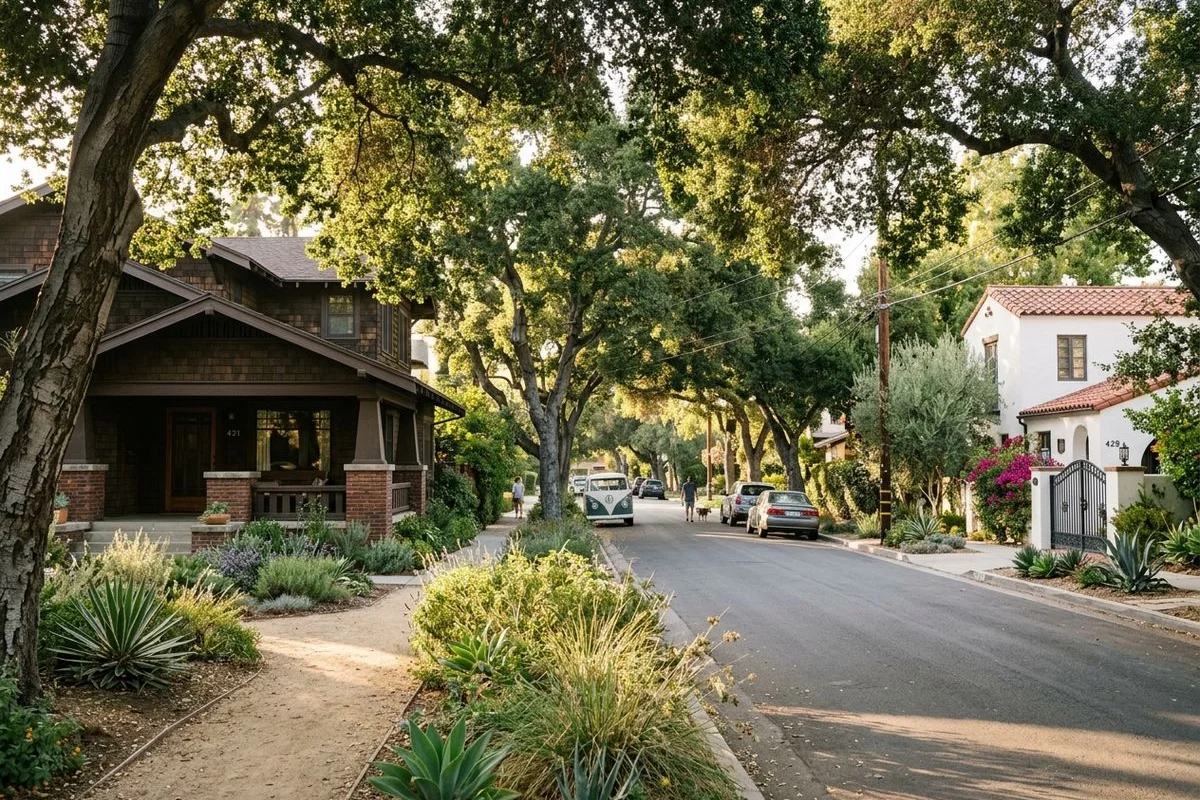
Landscape Design Tips for New Construction in the San Gabriel Valley
New construction gives homeowners a rare opportunity: the landscape can be planned with the same care as the house itself, instead of patched together later from leftover space and quick fixes. In the San Gabriel Valley, that opportunity matters even more. The region’s hillside character, dry summers, water constraints, and fire exposure all shape what a successful yard should look like. A landscape that thrives here is usually not the one with the most plant variety or the widest lawn. It is the one that matches the site, handles runoff intelligently, respects slope conditions, and uses water with discipline.
That is especially true for new homes, where bare soil, compacted grades, and unfinished drainage often create the first problems before a plant ever goes in the ground. I have seen new properties look beautiful on paper and still struggle for years because the landscape plan treated the yard as decoration rather than infrastructure. In the San Gabriel Valley, hardscaping, planting, irrigation, and drainage need to work as one system. When they do, the result feels settled, durable, and appropriate to the place.
Start with the site, not the plant list
The best landscape design begins long before plant selection. California’s water guidance emphasizes evaluating irrigation needs, soil, sun exposure, and plant choices before removing turf or reworking a yard, and that advice applies even more strongly to new construction. A blank lot can give a false sense of freedom. In reality, the site already has rules. Some areas may stay hot all afternoon. Some may shed water quickly. Others may collect runoff from roofs, walkways, or upper slopes. Those conditions should drive the design.
In the San Gabriel Valley, microclimate matters a great deal. A front yard facing west will behave differently from a sheltered side yard. A slope near the foothills will dry faster than a flat lot in a more protected pocket. New construction often exposes these differences because there is no mature canopy to moderate heat or wind. Before anyone orders plants, it helps to spend time observing where the sun lands at different hours, where soil stays damp, and where water moves after irrigation or rain. That early observation saves money later, especially when the design includes drought resistant landscaping and not just the promise of it.
Soil condition deserves equal attention. New grading can leave the top layer thin, compacted, or inconsistent. That does not mean the landscape is doomed, but it does mean soil preparation should be intentional. The goal is not a chemically engineered yard. It is a stable base that supports root growth and drainage without becoming a muddy basin or a hard crust. Many of the landscapes that fail in new construction fail because the soil and the irrigation system were treated as afterthoughts.
Think of hardscaping as the frame, not the filler
Hardscaping does more than add structure. In a new landscape, it often determines how the entire property functions. Walkways, patios, retaining elements, edging, steps, and other built features help organize traffic and protect planting areas from wear. On sloped lots, hardscaping can make steep ground usable while also reducing erosion. In flat yards, it can create definition and reduce the temptation to overuse turf simply because there is open space to fill.
The key is restraint. Hardscaping should solve a specific problem or support a specific use. A patio that sits where people naturally gather will be useful for years. A path that safely handles grade changes makes the property feel finished. But overbuilding can make a yard feel hot, rigid, and expensive to maintain. In the San Gabriel Valley, where summer heat can punish exposed surfaces, the amount and placement of hardscaping should be balanced with shade, planting, and permeability.
I usually encourage homeowners to ask a simple question before committing to a built feature: what will this part of the yard need to do most often? If the answer is provide access, reduce slope issues, contain runoff, or create a usable outdoor room, hardscaping earns its place. If the answer is only fill space, planting may be the better move.
New construction and hillside landscaping call for a different mindset
Hillside landscaping is a major issue in the San Gabriel Valley, and for good reason. Slopes bring beauty, but they also bring runoff, erosion, and maintenance challenges. A hillside yard that looks clean on installation day can become a problem after the first strong watering or storm if the grade was not handled thoughtfully. Soil movement, exposed roots, and gullies are not cosmetic issues. They are signs that the landscape is fighting the site instead of working with it.
On slopes, plants are not just visual features. They are part of the stabilizing system. Deep-rooted, drought-tolerant plantings help anchor soil, slow water, and reduce erosion. The California Native Plant Society points out that slopes need erosion control, drought tolerance, and firewise planting, which is exactly the combination that makes sense in foothill and hillside properties here. That does not mean every hillside should be covered edge to edge with the same plants. It means the plant palette should be chosen for function as much as appearance.
A hillside landscape also needs realistic maintenance planning. If access is difficult, choose plants that can survive with less intervention once established. If the slope has awkward transitions, use stepped planting zones or terraces where appropriate rather than forcing mowing or hand-weeding across unstable ground. In practice, a hillside yard often looks best when it is layered, with structural hardscaping at key points and planting that softens the grade instead of fighting it.
Water use should be designed, not guessed
Water efficiency is not an optional feature in this region. California’s Model Water Efficient Landscape Ordinance sets expectations for new and renovated landscapes and encourages native or climate-appropriate plants, alternative water sources, and efficient irrigation. For new construction, that matters from day one. A yard that was designed without water efficiency in mind can become expensive to maintain, harder to approve, and less resilient during drought conditions.
One of the most common mistakes is treating all plants as if they need the same irrigation schedule. They do not. Even within a drought-tolerant palette, water needs vary. California’s water guidance points homeowners toward tools like WUCOLS, which helps match plant selection to regional water needs. That kind of matching is worth the time because it reduces the common problem of overwatering some plants while underwatering others.
This is also where irrigation design becomes part of the landscape design, not a separate trade. Drip systems, properly zoned spray areas, pressure management, and smart placement all help avoid waste. Newly planted landscapes often need more frequent irrigation at first, then less over time as roots establish. If the system is set up only for the first season, it may not serve the site well afterward. A good design anticipates the transition from establishment to long-term maintenance.
Native and climate-appropriate plants fit the area naturally
The San Gabriel Valley benefits from a plant palette that understands the local climate and ecological character. California native plants are often a strong fit because they are adapted to local conditions, support water-wise design, and help the landscape feel like it belongs in the region rather than imported from somewhere else. The best plantings are not just drought resistant landscaping in theory. They are plants that look comfortable in the sun, hold up on slopes, and create structure across the seasons.
Some locally fitting examples include California buckwheat, California sagebrush, manzanita, ceanothus, monkeyflower, foothill penstemon, bunchgrasses, and San Gabriel oak. These kinds of plants can bring texture, bloom sequence, and seasonal movement without demanding a lawn-style watering regimen. The point is not to create a monoculture of natives. It is to build a resilient planting structure around plants that already understand the climate.
There is also a visual advantage. Many new construction landscapes look generic because they rely on broad swaths of the same few ornamental plants used everywhere. Native and climate-appropriate selections give the yard identity. They also tend to age better. A mature manzanita or ceanothus can anchor a front yard in a way that annual replacements never will. On a larger property, a mix of shrubs, grasses, and groundcover can create rhythm without clutter.
Firewise planning belongs in the first draft
In the San Gabriel Valley, especially near the foothills and open spaces of the San Gabriel Mountains, firewise planning is not an abstract concern. LA landscaping companies The landscape should be designed with ember exposure, defensible space, and plant placement in mind. The goal is not to sterilize the yard or eliminate all character. It is to reduce avoidable risk and make maintenance realistic.
This is where many new homeowners underestimate the value of simplicity. A landscape with well-spaced plant masses, clean edges, and clear access around the structure is easier to maintain and easier to defend than one with dense, layered vegetation pressed directly against the house. Plant selection matters, but so does placement. A tough, drought-tolerant shrub may still be the wrong choice if it is installed too close to a vent or crowded beneath a combustible overhang.
A practical firewise design often pairs low, manageable planting near the structure with more generous planting farther out in the yard. That approach gives the property texture while respecting the needs of defensible-space planning. In many cases, hardscaping helps too. Gravel pathways, patios, and other noncombustible surfaces can define zones and make maintenance easier, as long as they are integrated thoughtfully rather than sprinkled in as decoration.
Drainage should be solved before the plants go in
New construction can produce drainage headaches that are invisible until the first watering cycle. Roof runoff, slope runoff, and compacted soil often combine to send water where it should not go. If that water has nowhere to move, plants suffer, soil erodes, and hardscape settles unevenly. Good landscape design addresses stormwater runoff early, because drainage issues are much easier to fix before the yard is fully planted and finished.
The design should show where water comes from, where it slows down, and where it exits. In some yards, that means adjusting grading or routing downspouts more carefully. In others, it means using planting beds and permeable transitions to catch and absorb water where appropriate. The exact solution depends on the site, but the principle remains the same: a landscape should manage water, not merely survive it.
This is especially important on slopes, where poor drainage can damage both planting and structure. Erosion control is not a decorative concern. It is foundational. If the soil is washing away, the landscape never really gets a chance to establish.
HOA rules matter, but they do not cancel water-efficient choices
Many new homeowners in the San Gabriel Valley have to work within HOA guidelines, and that can create confusion about what is allowed. California water-restriction guidance makes clear that homeowners’ associations cannot prohibit certain water-efficient landscaping choices during drought-related restrictions. That does not mean every HOA is irrelevant, and it does not mean approvals become automatic. It does mean homeowners have more room than they sometimes assume when planning drought-tolerant, water-wise landscapes.
In practice, this makes early communication valuable. If a landscape plan includes turf removal, native plantings, or a more restrained hardscape-and-planting mix, it is better to clarify expectations before installation begins. A thoughtful plan that is visually neat, clearly intentional, and aligned with regional water needs usually presents well even in communities with detailed design standards.
That said, compliance should not be the only goal. A landscape can meet HOA expectations and still fail as a site-specific design. The stronger approach is to build a yard that satisfies both the rules and the local conditions, which is entirely possible when the plan is done with care.
A practical way to prioritize the first phase
Not every new-construction landscape has to be finished all at once. In fact, staging the work often leads to better results, especially when budgets and soil conditions are real constraints. The trick is to install the bones first, then build the planting structure in a way that does not create rework later.
A sensible first phase often focuses on these five priorities:
That sequence prevents the common mistake of putting in plants before the site is ready to support them. It also makes future additions easier. Once the basic structure is sound, the landscape can evolve without constantly undoing earlier work.
What a finished San Gabriel Valley landscape should feel like
The most successful new-construction landscapes in this region usually share a few qualities. They are efficient with water, but not visually sparse. They use hardscaping where it genuinely improves function. They treat hillsides as special conditions, not obstacles. They rely on plants that fit the climate and the site, rather than fighting both. And they are calm about their own beauty, which is often the sign of a mature design.
The San Gabriel Valley’s hillside visual character deserves that kind of response. A good landscape does not try to overpower the terrain or imitate a wetter region. It reflects the local environment in a more disciplined way. Drought resistant landscaping, native habitat gardening, and firewise choices are not compromises here. They are the ingredients of a landscape that lasts.
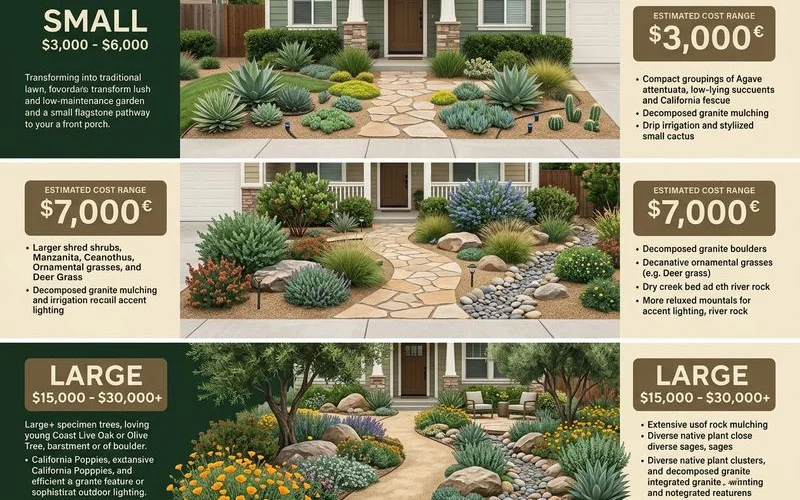
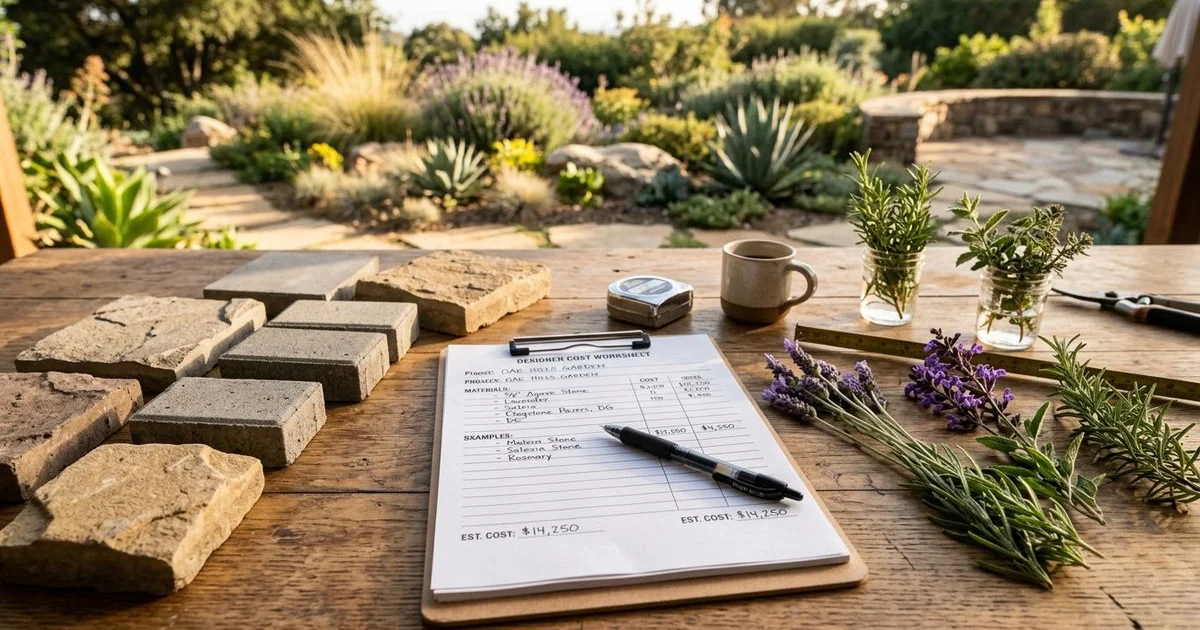
For new construction, that is the real goal. Not just to make the yard look finished for the first open house or first summer. The better test is whether it still works after a season of heat, a period of limited watering, and the ordinary wear that comes with living in it. If the design can handle that, it was planned well from the start.