
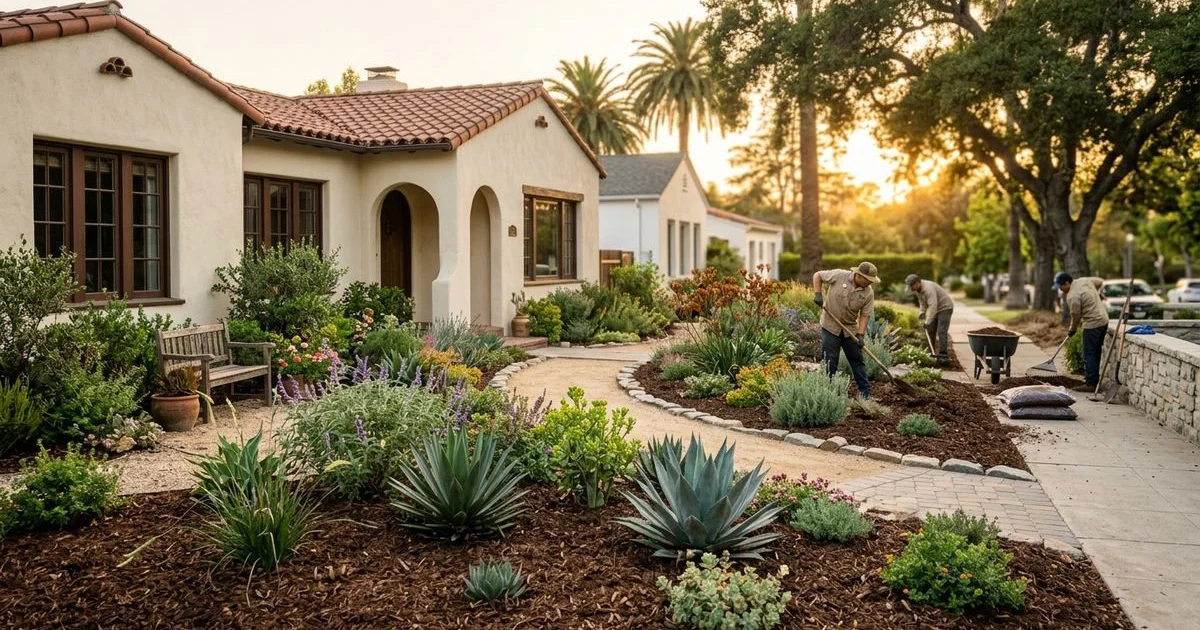
Hillside Landscaping Ideas for Native, Drought-Tolerant Plants
Hillside properties ask more of a landscape than flat ground ever does. A slope has to hold soil, slow water, survive long dry periods, and still look intentional from the street. In the San Gabriel Valley, that challenge is amplified by the region’s visual character, the pressure of water conservation, and the realities of fire-prone foothill settings. A good hillside plan does not start with decoration. It starts with drainage, soil behavior, sun exposure, and plant selection that makes sense for the microclimate on the slope.
That is why native, drought-tolerant planting is such a strong fit for hillside landscaping. The right plant palette can reduce irrigation demand, help with erosion control, support habitat, and create a landscape that feels rooted in the local setting rather than borrowed from somewhere else. When the design also respects hardscaping, runoff, and firewise spacing, the result is more durable and easier to maintain over time.
What a hillside really needs before planting begins
A slope is always trying to move. Gravity pulls water and soil downhill, and the way a hillside is graded, compacted, and irrigated affects how quickly that happens. Before anyone gets excited about plant color or bloom season, the site needs a sober look at how water moves across it. On a steep bank, even a small irrigation mistake can send runoff straight to the bottom, leaving the upper slope dry and the lower edge soggy. That uneven moisture is one of the quickest ways to lose plants and create gullies.
For hillside landscaping, the most useful first questions are practical ones. How much direct sun does the slope receive? Where does water pool after rain? Is the soil loose, compacted, rocky, or heavily amended? Does the slope face hot afternoon sun or benefit from some shade? Those details matter because plant water needs and stress tolerance shift sharply with exposure. California’s water conservation guidance points landowners toward this kind of site assessment before turf removal or major replanting, and that advice is especially relevant on hillsides, where a one-size-fits-all palette rarely performs well.
The other issue is erosion. Bare soil on a slope can wash away quickly, especially in the first season after disturbance. The goal is to establish cover in layers, so roots stabilize the soil and foliage interrupts surface flow. That is where native and drought-tolerant plants have an advantage, since many are adapted to local rainfall patterns and can establish strong root systems without constant watering. In a hillside context, they are not simply attractive choices. They are structural ones.
Native plants that belong on San Gabriel Valley slopes
The San Gabriel Valley sits in a landscape where foothill and hillside plant communities make immediate visual sense. Native plants from nearby plant communities tend to look at home because they are home. They also tend to fit the local climate more naturally than thirsty ornamentals that demand frequent irrigation and heavy maintenance.
California buckwheat is one of the most useful slope plants because it is low, tough, and well suited to dry conditions once established. It can knit together exposed areas without making the hillside feel rigid or overbuilt. California sagebrush brings a softer, more open texture that works beautifully when mixed with finer foliage and bunchgrasses. Manzanita adds structure, evergreen presence, and seasonal interest through its bark and form, while ceanothus can provide mass and seasonal bloom without requiring the kind of water use associated with traditional foundation shrubs.
Monkeyflower and foothill penstemon are especially useful where you want color without sacrificing drought resistance. They work well at the edges of boulders, along terraces, or in pockets where runoff slows and a bit more soil depth is available. Bunchgrasses are often overlooked, but on a slope they are among the best tools for visual rhythm and soil retention. Their fibrous roots help hold ground, and their form breaks up a hillside in a way that feels natural rather than fussy.
For larger sites or those aiming for a stronger native habitat garden feel, locally named species such as San Gabriel oak can be valuable where space and conditions allow. In the San Gabriel Mountains region, native habitat is not just a design preference. It is part of the ecological context of the place. A thoughtful hillside landscape can echo that setting without trying to imitate wild land too closely.
Drought-tolerant design does not mean sparse design
A common mistake in drought resistant landscaping is assuming that low water has to look austere. It does not. Good drought-tolerant landscape design uses texture, height variation, seasonal bloom, and spacing to make the slope feel layered and alive. The trick is commercial landscapers Pasadena to replace thirsty mass with plants that create interest through form and adaptation rather than sheer volume of irrigation.
On a hillside, the best compositions usually mix ground-hugging species with mid-height shrubs and a few structural accents. This keeps the slope visually anchored. It also reduces the appearance of instability that sometimes happens when a hillside is planted with only a handful of large shrubs spaced too far apart. If the planting feels too open in the first year, patience matters. Native plants often spend their early months building root systems before they put on the more dramatic top growth people expect. That can look modest at first, but it pays off later.
There is also a seasonal dimension worth respecting. Many native plants in Southern California respond to cool-season rainfall and then endure long dry spells with varying degrees of dormancy or reduced growth. That means the landscape should not be judged by summer fullness alone. A slope that looks restrained in August can be thriving in spring. Design with that cycle in mind, and the garden will feel more honest and more resilient.
Hardscaping has a job to do on a slope
Hardscaping is not just a visual counterpoint to planting. On a hillside, it can be the backbone of the entire landscape. Steps, retaining walls, terraces, swales, and stone accents can slow water, define movement, and create small pockets where plants have a better chance of establishing. Without some form of structural support, a steep slope can be difficult to maintain, especially where soil is shallow or runoff is aggressive.
The best hardscaping for hillside landscaping works with the land rather than against it. Low terraces can create level planting benches. Rock placement can interrupt sheet flow and give moisture a chance to soak in. A path with careful drainage can make maintenance safer while also framing the planted areas. These elements should feel integrated, not tacked on after the fact.
There is a real balance to strike here. Too much hardscape can make a hillside feel overheated and rigid, which is the opposite of what drought resistant landscaping should achieve. Too little hardscape, and the slope may struggle to hold soil or offer access. A well-balanced plan often uses hardscaping sparingly, in the exact places where it protects the landscape from erosion or makes the site usable for pruning, inspection, and irrigation adjustment.
Water use, irrigation, and the first few seasons
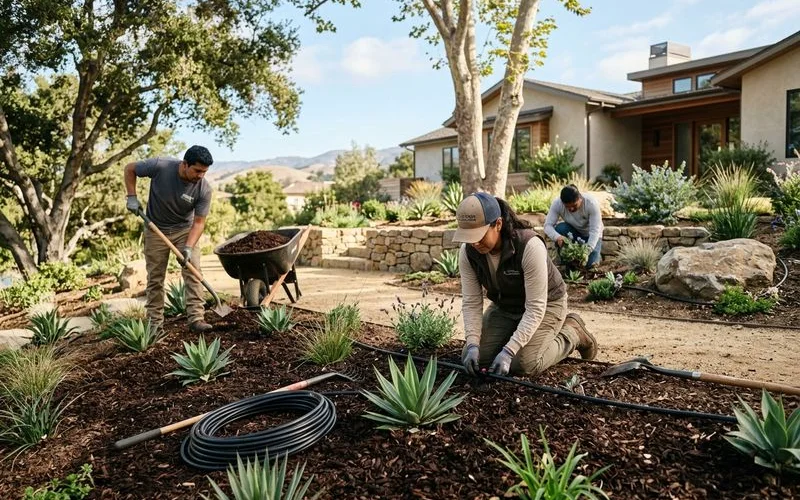
The most successful drought-tolerant hillside landscapes are usually built around efficient irrigation, not no irrigation. New plantings need establishment water, especially on slopes where runoff can limit how deeply moisture reaches the root zone. The key is to deliver water in a way that encourages roots to move down and out, rather than stay near the surface.
California’s statewide Model Water Efficient Landscape Ordinance matters here because it reinforces the idea that new and renovated landscapes should use water wisely, rely on climate-appropriate plants, and incorporate efficient irrigation. That framework fits hillside design well. It pushes the conversation toward systems that make sense long term, not just the first month after planting.
In practical terms, irrigation retrofits can make a dramatic difference. If the slope still has old turf-style watering equipment, that is often the first thing to change. Spray systems on hillsides commonly waste water through overspray and runoff. Drip or other targeted delivery methods are usually better suited to slope planting because they apply water more slowly and more precisely. The exact setup depends on grade, plant spacing, and soil texture, but the principle is constant: slow the water down and keep it where roots can use it.
This is also where microclimate matters. A west-facing slope in the San Gabriel Valley will not behave like a shaded north-facing bank. The hotter face may need different plant placement, more careful establishment, and closer attention to mulch and runoff. The cooler side can often support slightly broader species choices. Good landscape design reads those differences instead of flattening them into one generic plan.
Erosion control and runoff deserve as much attention as plant choice
Many hillside projects fail because the plants were chosen well but the water was not managed well. If irrigation or stormwater concentrates in narrow paths, it can cut channels into the slope and undermine roots. That is why erosion control should be considered part of the planting plan, not a separate cleanup task.
The simplest strategies are often the most effective. Break long slopes into smaller visual and hydrological sections. Avoid leaving bare soil exposed for long periods. Use plants with spreading root systems where appropriate. Add mulch judiciously so the soil surface is protected from direct sun and impact, but do not pile it against stems. Where runoff is concentrated, consider how hardscaping or grading can spread water more evenly before it reaches the plant bed.
Stormwater runoff is not just an engineering issue either. It affects plant survival. Water that races off the surface does little for roots, and water that collects in one low area can drown species that prefer drier conditions. A hillside landscape that handles rainfall gracefully is usually more successful in summer too, because the soil structure has been respected from the start.
Firewise planting and defensible-space thinking
In hillside parts of the San Gabriel Valley, firewise landscaping is not a side topic. It is part of responsible design. Native plants can fit fire-conscious planning well, but they still need to be placed with care. The goal is not to sterilize the landscape. It is to reduce ignition risk, manage fuel continuity, and avoid dense, overly dry plant mass near vulnerable structures.
This is where judgment matters more than slogans. A slope planted entirely in high, continuous shrub cover may look cohesive, but it can create unwanted fuel continuity. On the other hand, a landscape with too much bare ground and too little canopy can become harsh and unstable. The best fire-resistant planting strategies use spacing, plant form, and maintenance discipline. They also take ember-resistant zone rules seriously, especially around structures and access points.
Native plants commonly associated with the region, such as California buckwheat, ceanothus, and manzanita, can be part of a firewise landscape when they are positioned thoughtfully and maintained properly. The same is true of bunchgrasses and other meadow-like elements. What matters is not simply the species name. It is the layout, irrigation, pruning, and relationship to buildings and hardscape.
HOA rules, turf removal, and the practical side of water-wise choices
Homeowners’ associations sometimes complicate landscape changes, but California water guidance has put real limits on what HOAs can prohibit when drought-related restrictions are in place. That matters for homeowners who want to replace turf or install water-efficient planting on a slope. Water-wise landscaping is no longer a fringe preference. It is part of the broader regulatory and conservation environment.
For many hillside properties, turf removal is one of the smartest changes available. Grass on a slope can be difficult to water evenly, prone to runoff, and expensive to maintain. Replacing it with native and drought-tolerant plants often reduces water demand and gives the hillside a more natural character. Still, turf removal should not be rushed. If the grass is removed before there is a solid plan for irrigation, soil protection, and erosion control, the slope can become vulnerable fast.
A good turf conversion begins with assessment, not demolition. Look at how much sun the slope gets. Decide which portions need the most stabilization. Study where irrigation can be improved and where water tends to escape. Then choose plants for the right exposures rather than trying to make one planting solve every problem on the site.
A landscape that fits the San Gabriel Valley
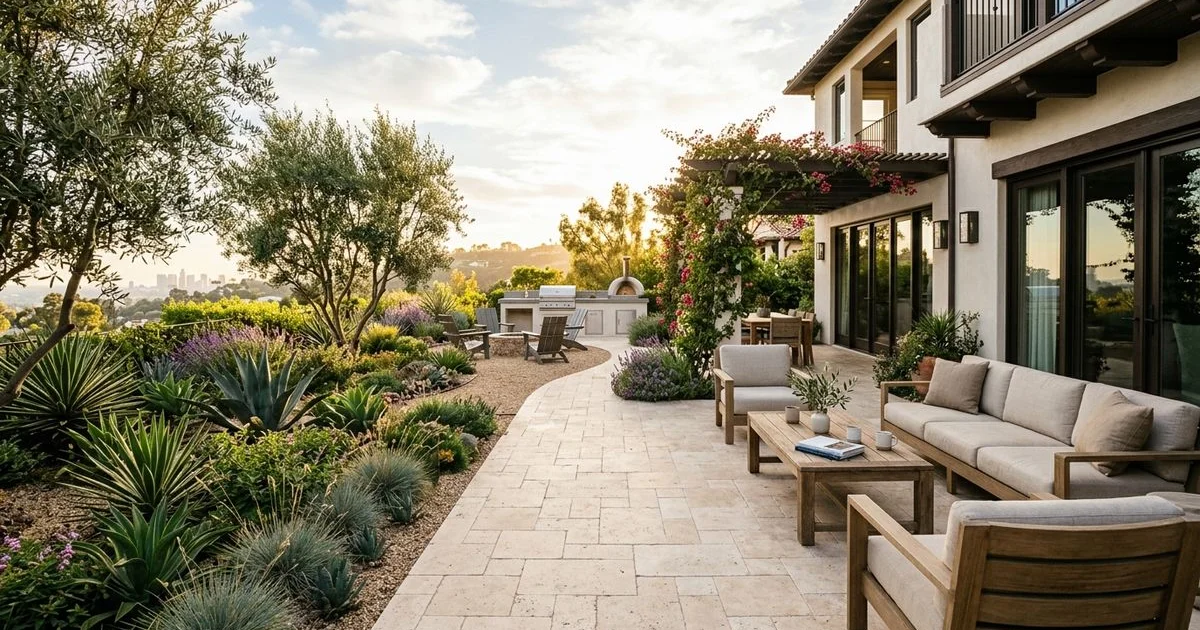
There is a reason hillside landscaping in this region feels most successful when it reflects the surrounding landforms. The San Gabriel Mountains, nearby foothills, and the Valley’s slope-adjacent neighborhoods create a strong visual and ecological context. A landscape that uses native habitat cues, water-efficient planting, and selective hardscaping tends to feel grounded in place rather than imposed on it.
That does not mean every hillside should look wild. It means the design should respect the terrain, the climate, and the maintenance reality of the property. Some homeowners want a more naturalistic slope that blends into the view. Others need cleaner edges, more defined paths, or a stronger architectural framework. Both approaches can work if the plant palette is honest about water needs and the grading supports drainage rather than fighting it.
What I have seen, over and over, is that the most durable hillside projects are rarely the most complicated. They are the ones where the designer paid attention to how the slope behaves in winter, what the sun does in late summer, and how much maintenance the owner is willing to perform after the initial install. The right plants, especially native and drought-tolerant ones, can do a surprising amount of the work. But they do their best work when the whole site supports them.
A practical way to think about plant selection
If the hillside gets full sun and heats up quickly, favor plants that tolerate exposure and dry conditions after establishment. If a section stays cooler or receives partial shade, use that to your advantage and place species that appreciate a little more moderation. If the soil is shallow or rocky, lean into plants that do not demand rich, deep beds. If runoff is a problem, choose species and layout that slow water instead of pushing it downhill.
That kind of site-specific thinking is at the heart of strong landscape design. It avoids the trap of treating all drought-tolerant plants as interchangeable. They are not. A plant that thrives in one microclimate may struggle in another part of the same slope. Matching the right species to the right place is what turns a collection of tough plants into a coherent hillside landscape.
A hillside planted with California buckwheat, California sagebrush, manzanita, ceanothus, monkeyflower, foothill penstemon, and bunchgrasses can look remarkably composed when those species are arranged with care. Add in thoughtful hardscaping, efficient irrigation, and firewise spacing, and the slope becomes more than decorative. It becomes functional, resilient, and suited to the conditions it actually lives in.