
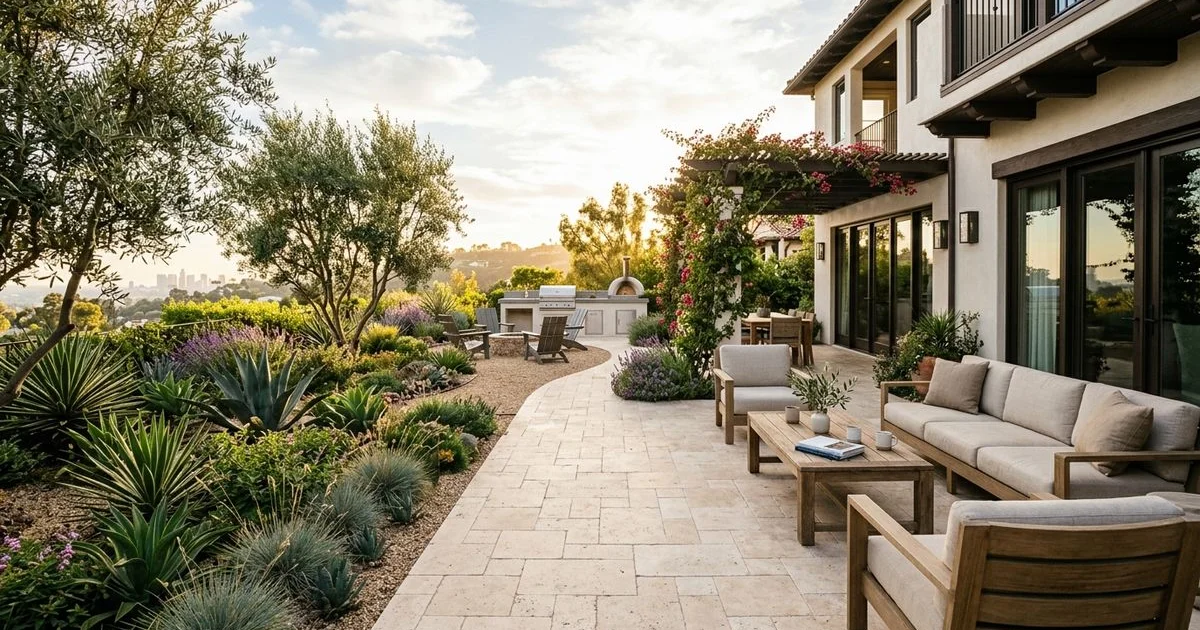
A Guide to Planting California Sagebrush in Dry Landscapes
California sagebrush earns its place in the landscape the honest way. It does not rely on flowers for much of the year, it does not need constant irrigation once established, and it brings the kind of silver-green texture that can soften stone, break up hard lines, and make a dry garden feel intentional instead of sparse. In the San Gabriel Valley and across much of Southern California, that matters. Water-wise planting is not a trend here, it is part of practical landscape design. The same goes for hillside landscaping, where erosion, runoff, and fire exposure shape every good planting decision.
For homeowners planning a drought resistant landscaping project, California sagebrush offers more than a native plant checkbox. It is one of those shrubs that helps a dry garden look rooted in place. It belongs in gardens that need a lighter irrigation footprint, gardens that must work around slopes or retaining walls, and gardens that need to sit comfortably alongside hardscaping rather than fight it. When it is placed well, it can make a front yard, side yard, or foothill property feel quieter, more natural, and more finished.
What California sagebrush brings to a dry landscape
California sagebrush, a California native plant associated with chaparral and coastal sage scrub communities, has a fine texture that reads almost airy from a distance. Up close, the foliage is aromatic and soft-looking, with a gray-green cast that catches light beautifully. In landscape design, that color is useful because it pairs easily with decomposed granite, sandstone, concrete, gravel, and the muted tones that often show up in modern hardscaping.
The plant also behaves in a way that suits dry sites. It is not a lawn substitute, and it should not be treated like a hedge that needs to be trimmed into form every few weeks. It works best when given room to read naturally. That is a helpful reminder in regions where people often try to make native plants fit a highly formal frame. California sagebrush usually looks better when the design respects its loose character.
There is also a bigger reason to use it. California’s water agency encourages homeowners to assess irrigation, soil, sun exposure, and plant selection before removing turf, and to match plants to regional water needs. That approach is the backbone of successful water-wise landscaping. A shrub like California sagebrush makes sense only when it is paired with the right site conditions and the right irrigation plan. Used carelessly, it can struggle. Used well, it can become one of the most reliable anchors in a dry garden.
Where it fits best
In my experience, California sagebrush is most convincing when it is placed where the land already wants to feel open and sun-baked. Full sun is the safest starting point. In shaded or heavy, poorly drained spots, it tends to lose vigor and can become less satisfying as a design element. That is one reason it is often a strong candidate for foothill properties, sloped yards, and exposed edges where the sun is abundant and the soil drains quickly.
It also fits naturally into San Gabriel Valley landscapes where the visual character of the hills matters. Native and climate-appropriate planting can help a new or renovated yard feel connected to the surrounding terrain instead of imposed on it. That is especially valuable where the slope of the land is visible from the street or where the house sits against a hillside backdrop. California sagebrush can help carry that visual language across a yard, especially when it is mixed with grasses, low shrubs, and a few larger structural plants.
The plant does not ask for rich soil, and that is a virtue in drought resistant landscaping. Too much amendment can sometimes create the wrong expectations, encouraging deeper moisture retention than a native dryland shrub really needs. I have seen more than one well-intended planting fail because the soil was treated like a vegetable bed rather than a habitat planting. The goal is not lushness. The goal is stability.
Planning before you plant
Good results begin before a single hole is dug. California water guidance makes a point of evaluating irrigation, soil, sun exposure, and plant selection before turf removal, and that sequence is worth following. If a project starts with demolition instead of diagnosis, the new planting often inherits the old problems.
For California sagebrush, drainage matters as much as sun. A plant that thrives in dry landscapes still needs the ability to shed excess water. On slopes, that is usually less of a problem than on flat lots with compacted soil, but it is still worth paying attention to grading and runoff. If water moves quickly across a hillside, young plants may dry out too fast. If water collects near the roots, the shrub can suffer. That is why hillside landscaping should never be treated as a simple matter of filling in open space with drought-tolerant plants. The slope itself is part of the design.
Microclimate also deserves real attention. A hot, south-facing wall, a reflective driveway, or the edge of a patio can change how the plant behaves. California sagebrush can handle sun, but reflected heat plus poor irrigation design can be punishing during establishment. A spot that looks ideal on paper may be too exposed in practice if it is tightly boxed in by paving and masonry. In that case, the better move may be to place the sagebrush a little farther out, where it can breathe, and use lower, tougher companion plantings nearer the hardscape.
This is where thoughtful landscape design pays off. The plant should serve the site, not the other way around.
Pairing it with hardscaping and structure
California sagebrush is especially useful in landscapes that include rock, concrete, decomposed granite, or other hardscape elements. Its soft texture balances the rigidity of built surfaces. That contrast can keep a yard from feeling sterile, which is a common problem in overly minimal drought tolerant projects. A few well-placed shrubs can do what a larger number of smaller plants cannot, they create rhythm and movement.
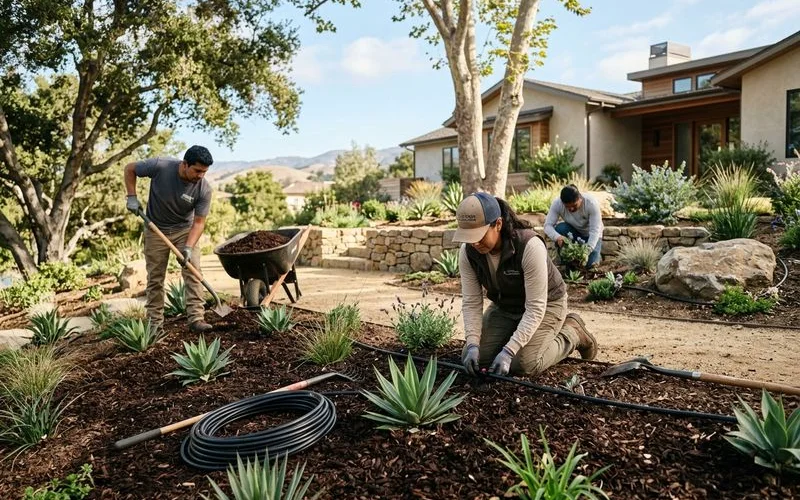
Near paths and patios, California sagebrush works best when it has enough clearance to stay open and informal. It should not be forced into a tight border where people will brush against it every day. The plant reads better as a transition between a built area and a more natural planting zone. On a slope, it can also help break up the visual sweep of a retaining wall or terrace, making the grade changes feel deliberate instead of abrupt.
That is one of the underrated jobs of hardscaping in dry landscapes. People often think of hardscape as the permanent, structural part of the yard and plants as the soft finishing layer. In reality, the two should cooperate from the start. California sagebrush is useful because it sits comfortably in that middle ground. It is not a specimen plant that demands spotlight treatment, but it is also not background filler. It contributes shape, texture, and seasonal movement without asking for the kind of water schedule that many ornamental shrubs need.
Planting it well the first time
California sagebrush is not difficult to plant, but it rewards careful handling during the first season. The biggest mistake is assuming that a dryland plant needs almost no water from day one. It still needs enough moisture to establish roots, especially in warm weather. The trick is to transition it gradually from regular watering to a more natural, low-water pattern.
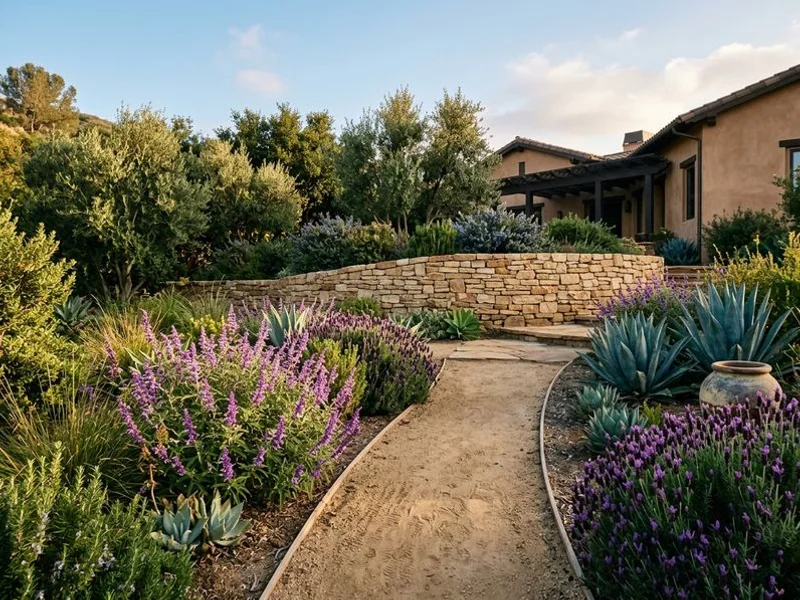
When planting, make sure the root zone sits in soil that drains freely. If the site is compacted, loosening the surrounding soil can help, but overworking it is not useful. Native and climate-appropriate plants usually do better in a site that is improved enough to support roots, not transformed into an overly amended pocket that behaves differently from the rest of the garden. If the landscape includes irrigation, it should be set up so the shrub receives deep, infrequent watering rather than frequent shallow splashes. That style of irrigation supports stronger roots and reduces waste.
Spacing matters too. California sagebrush needs air around it. Crowding it into a dense mixed bed can make maintenance harder and can encourage a look that feels cluttered rather than natural. In a dry garden, negative space is not empty space. It gives the planting room to read clearly. A few shrubs spaced with intention usually create a stronger composition than a mass of plants packed too close together.
Water, runoff, and erosion on slopes
On hillside properties, the conversation is always larger than the plant itself. Erosion control, drainage, and stormwater runoff shape the planting plan just as much as species choice. The California Native Plant Society has long emphasized that slopes need drought tolerance, erosion control, and firewise planting. That lines up well with the realities of foothill landscaping, where loose soil and gravity are always part of the picture.
California sagebrush can help stabilize a planting scheme by occupying space without requiring turf. It is useful in areas where you want cover, but not heavy, thirsty cover. In mixed hillside planting, it can be paired with other native and climate-appropriate species that share similar water needs. The point is to build a plant community that slows erosion, handles dry conditions, and does not overload the irrigation system.
Water management on a slope is often less about adding more water and more about directing water smartly. Irrigation retrofits are often necessary in older landscapes because the original system was designed for lawn, not native shrubs. A retrofit that better matches plant water needs can reduce runoff and improve plant performance at the same time. That is one reason California sagebrush belongs in modern drought resistant landscaping conversations. It works best when the irrigation plan has been reconsidered from the ground up.
Good companions for a native dry garden
A California sagebrush planting rarely stands alone. It usually works best in the company of other native or climate-appropriate plants that share the same water logic. California buckwheat, manzanita, ceanothus, monkeyflower, foothill penstemon, and bunchgrasses all fit naturally into the same broad design language. Together they create the layered feel of a dry meadow, chaparral edge, or foothill garden.
There is a practical design advantage here. Different plant forms give the landscape more depth. California sagebrush brings a loose, feathery texture. Buckwheat offers a different kind of structure. Bunchgrasses add movement. Manzanita and ceanothus contribute evergreen presence. Foothill penstemon can deliver seasonal color without forcing the whole design into a flower-bed look. That variety matters, especially in a landscape that needs to stay attractive through long dry stretches.
For sites in and around the San Gabriel Mountains, these plant choices also echo the surrounding ecology. That does not mean copying the wild exactly. It means drawing from a palette that belongs there. In places where rare, threatened, and endangered species are part of the broader habitat story, that respect for native plant communities has real value. Even a small residential garden can contribute to a larger sense of continuity when it is planted with care.
Firewise thinking and defensible space
California sagebrush has an important place in firewise landscaping, but it should be used with judgment. Any plant in a fire-prone region must be considered as part of the larger defensible-space plan. That means plant spacing, maintenance, and location matter as much as species. A native shrub is not automatically a safe shrub if it is dead, overgrown, or placed too close to vulnerable structures.
The San Gabriel Mountains region makes fire-aware planning especially relevant. Local guidance around ember-resistant zones and native plant choices reflects a simple truth, good design can reduce risk, but only when it is maintained. California sagebrush can participate in a fire-conscious landscape because it belongs in open, managed plantings, not tangled against the foundation or packed under wood fencing. It fits best where there is room for air movement and where the plant can be kept healthy without becoming dense and woody in a way that increases hazard.
This is where restraint matters. Firewise planting does not mean stripping a yard bare. It means choosing plants that fit the site and keeping the plant community readable, trimmed appropriately, and separated from ignition-prone areas. California sagebrush can be a useful part of that strategy when the landscape is planned holistically instead of plant by plant.
HOA rules, water restrictions, and the realities of approval
For many homeowners, the biggest obstacle to changing a landscape is not the plant list. It is the approval process. HOA communities can create friction around turf removal, irrigation changes, or visible shifts in planting style. California water-restriction guidance is clear that homeowners’ associations cannot prohibit certain water-efficient landscaping choices during drought-related restrictions. That matters for people trying to move toward more climate-appropriate plantings.
Still, even when a homeowner has the right to make water-wise changes, the best results come from a clear design plan. A yard that looks deliberate is easier to approve than one that looks unfinished. California sagebrush can help there, because it signals intent. It says native, dry, and regionally appropriate without looking messy when it is used with enough structure around it.
If you are working within an HOA, it helps to show that the plan is part of a broader landscape strategy, not just a few replacement shrubs. Tie the planting to water conservation, drainage, irrigation efficiency, and the visual character of the property. That framing often makes a stronger case than focusing on one species alone.
When not to use it
California sagebrush is not the right answer for every site. It is not ideal for heavily shaded yards, poorly drained soil, or places where people want a formal clipped look. It can also be frustrating if the rest of the garden is designed around frequent irrigation. In that setting, the shrub will either be overwatered or forced to coexist with plants that need a very different regime.
It is also not a good substitute for solving grading problems. If a slope is actively shedding soil or channeling stormwater in the wrong direction, the answer begins with drainage and erosion control, not with a planting palette. The plant can support the solution, but it cannot replace the underlying engineering.
That kind of honest limitation is worth stating because dry landscapes succeed when the plant material is matched to the site, not when it is forced to do a job it cannot do well.
A plant that rewards restraint
California sagebrush does not usually demand attention, but it rewards it. It asks for the right kind of sun, the right soil behavior, a careful irrigation plan, and enough space to keep its natural form. In return, it gives a dry landscape movement, texture, and a strong regional identity. For homes in the San Gabriel Valley, on hillside lots, or in any setting where water conservation and visual coherence matter, it can be one of the most satisfying shrubs to work with.
The strongest landscapes built around this plant tend to share a few qualities. They are designed with drainage in mind. They use hardscaping to frame, not transform your backyard overpower, the planting. They include native and climate-appropriate companions instead of isolated specimens. They respect the slope, the microclimate, and the local fire context. Most of all, they accept that drought resistant landscaping is not about making a yard look empty. It is about making it look well judged.
A garden with California sagebrush can feel open, quiet, and deeply rooted in place. That is a rare combination, and in dry country, it is often the one that lasts.